
Movement & Therapy: Partners in Recovery
At Dunham House, our integrated approach focuses on addiction rehabilitation. For clients with co-occurring mental health challenges, we connect them with our trusted network of mental health partners for specialized care. This collaboration ensures a comprehensive path to lasting recovery. This article outlines how movement-based approaches and specialized mental health care reinforce one another to address both the body and the mind. Many people seeking help want care that treats physical, emotional, and psychological needs together, not as separate problems. Below we define our integrated approach, describe movement techniques commonly used in recovery, review the evidence behind them, and explain how our dual-diagnosis programs support whole-person healing through this collaborative model.

What is an integrated approach in addiction recovery?
An integrated approach is a coordinated, whole-person strategy that blends multiple therapeutic methods to match each person’s needs. It acknowledges that emotional difficulties and physical well-being are linked. At Dunham House, our approach for addiction rehabilitation includes movement-based practices and other restorative modalities. For co-occurring mental health challenges, we collaborate with specialized mental health partners. By addressing mental and bodily symptoms together, this integrated care aims to strengthen resilience and support sustainable recovery.
What are the core benefits of an integrated care approach?
An integrated care approach delivers several practical advantages for people in recovery:
More complete symptom relief: Treating both psychological and physical contributors supports broader, more sustained recovery.
Greater engagement in care: Active practices like movement give patients concrete ways to participate and build self-efficacy.
A whole-person perspective: Integrated plans focus on overall wellness, not just reducing symptoms, helping people rebuild daily life and relationships.
These benefits illustrate how combining modalities and specialized care can strengthen outcomes for people facing complex mental health or substance-use challenges.
Which therapies support mental health and addiction recovery at Dunham House?

At Dunham House, we believe in a comprehensive approach to treatment that includes a variety of evidence-based therapies. These diverse techniques offer distinct but complementary benefits within a recovery plan, supporting emotional regulation, trauma processing, and a stronger mind-body connection.
Equine-assisted learning
Music therapy
Art therapy
Horticultural therapy
Recreational therapy
Cognitive Behavioural Therapy (CBT)
Dialectical Behavior Therapy (DBT)
Relapse Prevention Therapy (RPT)
Motivational interviewing (MI)
How does yoga therapy reduce anxiety and depression symptoms?
Yoga therapy integrates physical postures, breathwork and meditation to calm the nervous system and improve self-awareness. Research shows regular practice can lower cortisol (the stress hormone) and increase mood-regulating neurochemicals. Clients commonly report reduced anxiety, improved mood stability and a clearer capacity to manage stress after consistent, guided sessions.
Further research supports the effectiveness of body-oriented approaches, including dance/movement therapy, for addressing the layered needs of people with dual diagnoses.
Dance/Movement Therapy for Dual Diagnosis Recovery
This literature review examines current research on using dance/movement therapy as a treatment option for adults with dual diagnosis in recovery. It contrasts widely used models, like the 12-Step approach, with alternative and body-centered methods such as dance/movement therapy, body-oriented psychotherapy, and the somatic work of the Alexander Technique. These approaches offer a more holistic pathway to healing for individuals managing substance use alongside co-occurring mental health disorders.
Integrated Care For Dual Diagnosis
At Dunham House, our integrated approach focuses on addiction rehabilitation. For clients with co-occurring mental health challenges, we connect them with our trusted network of mental health partners for specialized care. This collaboration ensures a comprehensive path to lasting recovery.
What challenges do dual diagnosis patients face in recovery?
People with co-occurring disorders often navigate intense emotional swings, trauma triggers, and persistent cravings, all of which complicate recovery. Our diverse therapeutic approaches give patients healthy ways to release stress, rebuild bodily safety, and practice coping skills. For co-occurring mental health challenges, our trusted partners provide clinical therapies that address thinking patterns, relapse risks, and underlying trauma.
How does an integrated approach improve outcomes for co-occurring disorders?
By combining movement-based practices with specialized mental health care, our integrated approach improves emotional regulation, strengthens relapse prevention, and supports overall well-being. Research and clinical experience show that addressing mind and body together reduces symptom severity and helps people re-establish a more balanced, resilient life.
What evidence supports the benefits of movement-based therapies?
A growing evidence base links movement-based therapies to meaningful improvements in mood, stress response, trauma symptoms and overall functioning. Clinical studies increasingly recognize these methods as valuable complements to comprehensive care.
Which recent clinical studies highlight movement therapy effectiveness?
Recent peer-reviewed trials report that regular yoga practice can significantly reduce symptoms of anxiety and depression versus control groups. Other studies find that body-oriented therapies improve emotional regulation and lower trauma-related symptoms in people with PTSD. These findings reinforce the role of movement-based interventions within comprehensive treatment plans.
How does movement therapy enhance holistic mental health and addiction recovery?
Movement therapy supports physical health, releases mood-boosting endorphins, and cultivates mindfulness and body awareness. Together, these effects increase emotional resilience and personal agency, key ingredients for sustained recovery and improved quality of life.
How can patients experience holistic recovery at Dunham House?

At Dunham House, we offer a dual-diagnosis program that integrates a wide range of evidence-based therapies, including movement-based practices, into addiction rehabilitation. For co-occurring mental health challenges, we connect clients with our trusted network of mental health partners. Every care plan is individualized, so treatment targets the clinical, emotional, and physical aspects of recovery in a coordinated way.
What personalized care plans are offered in our integrated approach?
Our personalized plans integrate a wide range of evidence-based therapies, including movement therapies, mindfulness practices, and practical life skills work, for addiction rehabilitation. For specialized mental health care, we collaborate with our trusted partners. We work with each person to tailor interventions, set goals, and build skills that extend beyond the treatment setting.
What success stories illustrate the power of our integrated approach?
Clients at Dunham House often describe tangible improvements in mood, stress management, and daily functioning after engaging with our integrated approach. These recovery stories reflect how combining body-based work with specialized mental health care can transform how people relate to themselves and their recovery.
What common questions do patients have about our integrated care approach?
People frequently ask which approaches are involved, how movement work helps, and whether these approaches actually reduce symptoms and relapse risk. Clear answers help build confidence and encourage participation.
What approaches are included in our integrated care?
Our integrated care approach for addiction rehabilitation includes a variety of evidence-based therapies such as Equine-assisted learning, Music therapy, Art therapy, Horticultural therapy, Recreational therapy, Cognitive Behavioural Therapy (CBT), Dialectical Behavior Therapy (DBT), Relapse Prevention Therapy (RPT), Motivational interviewing (MI), yoga therapy, and mindfulness practices. For co-occurring mental health challenges, we connect clients with our trusted network of mental health partners who provide specialized psychotherapy. This comprehensive approach allows us to address emotional, cognitive, and physical contributors to distress in a coordinated way.
Can movement therapy improve depression and anxiety symptoms?
Yes. Movement therapies can reduce symptoms of depression and anxiety by releasing endorphins, lowering stress hormones, and strengthening mindfulness and self-regulation. When combined with specialized mental health care from our partners, these practices often produce larger and more durable improvements.
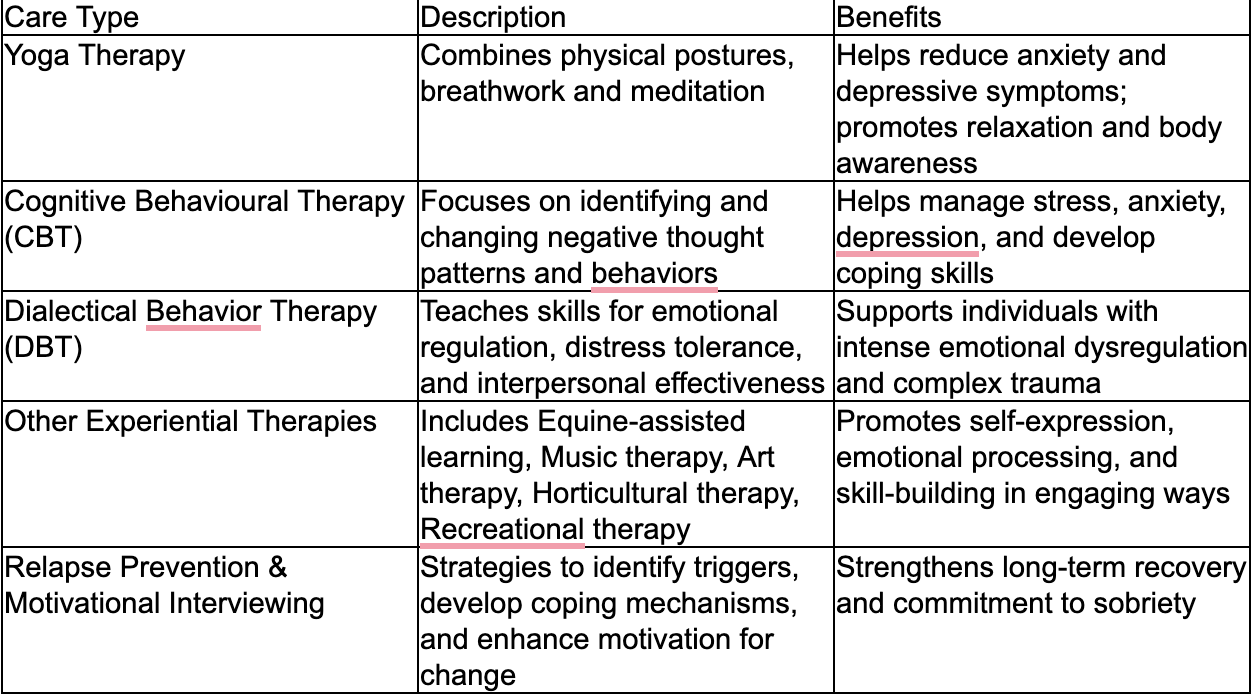
When movement-based practices and specialized mental health care are woven into a coordinated plan, people can address the full scope of their needs and move toward a more resilient, balanced life.
Conclusion
Our integrated care approach, which thoughtfully combines a wide range of evidence-based therapies for addiction rehabilitation with specialized mental health care from our partners, offers a practical, whole-person path to recovery. This approach improves engagement, supports emotional and physical healing, and is especially valuable for people with dual diagnoses. If you’re exploring options, our individualized programs at Dunham House can help you build the skills and stability needed for lasting wellness.

Dunham House
About Dunham House
Located in Quebec's Eastern Townships, Dunham House is a residential treatment centre specializing in addiction and providing support to individuals with concurrent mental health challenges. We are the only residential facility of our kind in Quebec that operates in English.
Our evidence-based programs include a variety of activities such as art, music, yoga, and equine-assisted therapy. In addition to our residential services, we offer a full continuum of care with outpatient services at the Queen Elizabeth Complex in Montreal.