
Returning to work after addiction recovery can feel overwhelming, and it can also be an important step in rebuilding routine, purpose and financial stability. This article offers practical resume strategies and employment resources to help make that transition smoother. You’ll find guidance on explaining employment gaps, highlighting skills gained through recovery, preparing for interviews, managing workplace stress, and locating supports available across Quebec and Canada.

How Can You Effectively Explain Resume Gaps Due to Addiction and Mental Health Recovery?
Explaining gaps on a resume related to addiction or mental health recovery works best when it is honest, concise and focused on growth. Many employers value transparency paired with evidence of stability and readiness to work. Framing the time away as a period of recovery and skill-building allows you to show how it strengthened your ability to perform in the workplace.
What Are the Best Strategies to Address Addiction Recovery on Your Resume?
When addressing a gap for recovery, try these practical approaches:
Highlight Transferable Skills: Call out strengths developed during recovery—for example, resilience, time management, problem-solving, and reliability.
Be Honest and Brief: Offer a short, factual statement such as “medical leave for health and recovery” rather than a detailed personal disclosure.
Use Positive, Forward-Looking Language: Emphasize what you learned and how it prepared you to return to work with renewed focus and stability.
These strategies help you build a clear, professional narrative that reassures employers about your readiness and suitability for the role.
Strategic Approach and Resume Management
When addressing employment gaps due to addiction recovery, frame the time away as a resolved health matter while maintaining your legal right to medical privacy. Use professional language such as "I took time away from work to address a personal health issue that is now fully resolved" or "I needed a planned sabbatical to handle important personal matters."
On your resume, consider using a functional or hybrid format that emphasizes your skills and achievements over strict chronological dates, and include any productive activities during your recovery, such as volunteer work, courses, certifications, or freelance projects, to demonstrate continued engagement and growth. You're not legally obligated to disclose specific medical details, so keep your explanation brief and professional while showing that you remained proactive during your time away from traditional employment.
How to Positively Frame Skills and Experiences Gained During Recovery?
Turn recovery-related experiences into clear examples of job-relevant strengths by following these steps:
Identify Skills: Reflect on specific abilities you strengthened — communication, empathy, teamwork, self-awareness or stress management.
Describe Growth: Briefly explain how overcoming challenges improved your reliability or problem-solving under pressure.
Link to the Role: Match those skills to the employer’s needs, showing concrete ways you can contribute on day one.
Communicating recovery as a source of practical skills can help hiring managers see your experience as an asset rather than a liability.
It’s also useful to understand how employers view candidates in recovery; research provides helpful context on hiring attitudes.
Employer Views on Hiring Individuals in Addiction Recovery
Research suggests employment is a key factor in recovery, yet employer attitudes have sometimes limited opportunities for highly marginalized groups.
Objectives: This study examined employers’ views on hiring individuals in recovery from addiction. Methods: A convenience sample of 382 employers affiliated with chambers of commerce completed an online questionnaire; the authors used descriptive and inferential statistics to analyze responses.
Results: Findings indicate that gender can influence hiring attitudes; women in the sample were more likely than men to hire individuals in recovery, and levels of concern varied by industry and perceived needs. Conclusion: The results illuminate factors that affect employability for this population and point to areas for further employer education and policy development.
What Are The Key Job Search and Interviewing Skills After Addiction Treatment?

Searching for work and preparing for interviews after treatment requires both practical preparation and confidence. Knowing how to present your experience, anticipate questions and manage the interview setting will increase your chances of success.
How Do You Navigate Job Interviews and Disclose Recovery Status Confidently?
Deciding whether to disclose recovery is personal. Use these guidelines to handle the conversation thoughtfully:
Choose the Right Time: Many people wait until an offer or a later stage in the process before sharing health-related information.
Control the Narrative: If you disclose, keep the focus on stability, the skills you’ve developed, and how you’ll meet job expectations.
Practice Responses: Rehearse short, calm answers to common questions so you stay composed if the topic comes up.
Approaching disclosure with preparation helps you remain confident and keeps the discussion professional and relevant to the role.
Interview Techniques and Building Confidence
In interviews, deliver your explanation confidently and immediately pivot to your current readiness and future value to the employer. After briefly addressing the gap with something like "During that time, I focused on my health and personal development, and I'm now recharged and more motivated than ever to commit to this role," quickly redirect the conversation to your qualifications, enthusiasm for the specific position, and what you bring to the company.
Recognize that your recovery demonstrates valuable workplace qualities, including accountability, resilience, discipline, and the ability to follow through on commitments, traits that make you a stronger employee. Avoid over-apologizing or over-explaining; instead, approach your job search with confidence, knowing that you've overcome significant challenges and developed skills that demonstrate your determination and reliability. Practice your explanation until it feels natural, and remember that the right employer will appreciate your honesty and recognize the strength it takes to rebuild your life and career.
Where Can You Find Sober-Friendly Employment Opportunities and Support?
Look for employers and supports that understand recovery by using these channels:
Specialized Job Boards: Search sites that list sober-friendly or recovery-supportive employers.
Support and Peer Networks: Local recovery groups and peer-support organizations often share job leads and provide referrals.
Community Programs: Municipal and nonprofit services often offer job search assistance, placement, and skills training tailored to people re-entering the workforce.
Combining online searches with community connections increases the likelihood of finding a workplace that supports your ongoing recovery.
How Can You Manage Workplace Reintegration and Stress to Support Long-Term Recovery?
Re-entering work successfully depends on recognizing triggers, building coping skills and planning for stress. Proactive strategies and a support plan at work can protect your recovery while you grow professionally.
What Are Effective Techniques for Managing Workplace Stress and Triggers?
Practical techniques to reduce stress and handle triggers include:
Mindfulness and Grounding: Short breathing exercises, brief mindfulness breaks or grounding techniques can help you reset during a stressful day.
Time and Task Management: Break tasks into manageable steps, set realistic deadlines and use prioritization tools to avoid overwhelm.
Build a Support Network: Identify coworkers, mentors or an employee assistance program you can turn to when challenges arise.
Using these approaches helps create a safer, more sustainable return to work.
What Legal Protections Exist for Employees in Recovery in Canada and Quebec?
Knowing your rights can help you advocate for a fair workplace:
Canadian Human Rights Act: Prohibits discrimination on the basis of disability, including addiction and recovery, and may require reasonable accommodation.
Quebec Charter of Human Rights and Freedoms: Offers similar protections provincially, including safeguards against workplace discrimination.
Legal and Community Supports: Several organizations provide guidance and legal help if you face discrimination or need information about accommodations.
Being informed about these protections empowers you to request support and to seek advice if problems arise.
Research also shows workplace policy matters: the right organizational approach can make a significant difference for employees in recovery.
Canadian Workplace Policies for Addiction Recovery Support
Problematic substance use affects both health and workplace safety. While many workplaces address substance use, policies often focus on rules rather than recovery supports. This narrative review calls for policies that explicitly include recovery assistance, stronger stakeholder engagement, confidential supports, and ongoing evaluation of policy effectiveness. Especially in safety-sensitive settings, employers are encouraged to integrate recovery-focused practices to promote a healthier, more productive workplace.
Workplace-facilitated recovery through substance use policies, 2025
Which Employment Resources and Vocational Training Programs Support Recovery in Quebec and Canada?

There are many programs designed to help people in recovery re-enter the workforce, from local supports to larger vocational training options that build skills and confidence.
What Local Job Reintegration Programs and Second-Chance Hiring Initiatives Are Available?
Examples of local supports and employer initiatives include:
Local Employment Services: Municipal and community agencies that help people overcome barriers to employment, including tailored job-search assistance.
Second-Chance Hiring Initiatives: Employers or programs that intentionally hire people with past substance-use or related issues and provide on-the-job support.
Community Workshops: At Dunham House, we offer sessions on resume writing, interview practice, and job-search strategies, organized and facilitated by our dedicated Recovery Pathways and Reinsertion Coordinator.
These programs can open doors and provide the practical help needed for a successful job search.
How Can Vocational Training Enhance Employability After Addiction Recovery?
Vocational training supports long-term employability in several ways:
Skills Development: Training builds marketable, job-specific skills employers need.
Networking: Courses and training programs connect you with instructors, employers and peers who can support your job search.
Confidence and Credibility: New credentials and updated skills strengthen your resume and your confidence in interviews.
Investing time in targeted training improves your job prospects and supports career stability over time.
How Do You Build a Sustainable Career Path and Support Network Post-Addiction Treatment?
Long-term success combines clear career planning with a reliable support system. Both elements help you stay focused on professional growth while protecting your recovery.
What Are Strategies for Long-Term Career Development While Maintaining Sobriety?
Consider these practical strategies:
Set Clear Goals: Define short- and long-term career milestones to track progress and adjust plans as needed.
Keep Learning: Pursue continuing education, certificates or workshops to stay competitive and expand your options.
Network Consistently: Build professional relationships that can offer mentorship, referrals and new opportunities.
Following a steady plan makes it easier to balance career growth with ongoing recovery needs.
How Can Mentorship and Support Networks Aid Professionals in Recovery?
Mentors and peer support play a key role in staying on track:
Practical Guidance: Mentors offer career advice, feedback and industry insight to shorten the learning curve.
Emotional Support: Trusted connections provide encouragement and perspective during setbacks.
Accountability: Regular check-ins with a mentor or peer group can help you maintain both recovery and career commitments.
Building these relationships increases the odds of steady career progress and sustained well-being.
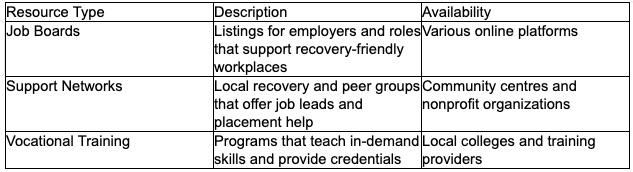
This table summarizes common resources that can help people in recovery find and keep employment.
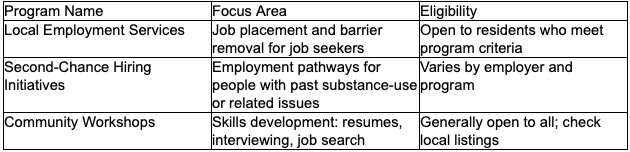
This table highlights typical programs in Quebec that support reintegration into work for people in recovery.
Conclusion
Successfully reintegrating into the workforce after addiction recovery is not only possible but can lead to renewed purpose and stability. By utilizing effective resume strategies, highlighting transferable skills, and accessing supportive resources, individuals can present themselves as strong candidates. Understanding employer perspectives and leveraging community programs further enhances job prospects. Take the next step in your journey by exploring available employment resources tailored for those in recovery.

Dunham House
About Dunham House
Located in Quebec's Eastern Townships, Dunham House is a residential treatment centre specializing in addiction and providing support to individuals with concurrent mental health challenges. We are the only residential facility of our kind in Quebec that operates in English.
Our evidence-based programs include a variety of activities such as art, music, yoga, and equine-assisted therapy. In addition to our residential services, we offer a full continuum of care with outpatient services at the Queen Elizabeth Complex in Montreal.