
Building a stronger mind and body during your recovery journey

When you're working through addiction recovery, your body and brain need more than willpower. They need the right fuel and movement to heal, rebuild, and thrive. Exercise and nutrition aren't just nice additions to your recovery plan, they're powerful, science-backed tools that can genuinely transform how you feel, think, and cope with challenges.
This guide walks you through exactly how physical activity and proper nutrition work together to support your mental health and reduce relapse risk. Whether you're starting your recovery journey, supporting someone who is, or working as a clinician, you'll find practical strategies you can start using today.
How Does Exercise Improve Mental Health and Aid Recovery?

Exercise does something remarkable for your brain, it doesn't just make you feel good in the moment, it changes your brain chemistry and structure in ways that support long-term healing. When you move your body regularly, you give your brain the conditions it needs to recover from damage addiction may have caused.
Think of exercise as a reset button for your stress response system. Regular physical activity helps regulate the hormones that spike when you're anxious or triggered, while boosting the chemicals that help you feel calm, focused, and emotionally stable. This isn't just about burning calories, it's about rebuilding neural pathways and creating a brain more resilient to cravings.
What Neurobiological Benefits Does Physical Activity Provide?
Your brain responds to exercise in several powerful ways that directly support recovery:
Endorphins and mood-boosting chemicals flood your system during and after exercise. These natural feel-good compounds promote well-being that can counteract the emotional flatness often associated with early recovery. When your brain's reward system has been hijacked by substances, exercise offers a healthy way to experience pleasure again.
Brain-derived neurotrophic factor (BDNF) increases with regular physical activity. Think of BDNF as fertilizer for your brain—it supports new neural connections and helps your brain become more adaptable. This neuroplasticity is crucial for learning new coping skills and responding effectively to therapy.
Stress hormone regulation improves with consistent exercise. Your body's central stress response system becomes less reactive over time, so everyday stressors won't feel as overwhelming.
Reducing inflammation is another key benefit. Chronic inflammation is linked to depression and cognitive difficulties, and exercise helps bring inflammatory markers back to healthy levels.
Which Types of Exercise Best Support Recovery?
Different types of movement offer complementary benefits:
Aerobic exercise like brisk walking, cycling, or swimming boosts BDNF and reduces depressive symptoms. Research shows that 30 to 45 minutes of moderate aerobic activity, three to five times weekly, produces significant improvements in mood and cognitive function.
Resistance training offers unique psychological benefits. When you lift weights or do bodyweight exercises, you build self-efficacy—the belief you can accomplish difficult things. This confidence spills over into other areas of recovery.
Mind-body practices such as yoga and tai chi combine physical movement with breath awareness. These practices are valuable for reducing anxiety and decreasing reactivity to cravings.
Sample Exercise Prescriptions:
Aerobic starter: 30-minute brisk walks three times weekly, building to 45 minutes
Strength foundation: Twice-weekly resistance sessions targeting major muscle groups
Mind-body integration: 20-30 minutes of yoga or guided breathing three times weekly
What Role Does Nutrition Play in Mental Health and Addiction Recovery?

Your brain requires specific raw materials to function properly. Just as a car needs the right fuel, your brain needs the right nutrients to produce neurotransmitters, manage inflammation, and maintain healthy cell membranes. During recovery, these nutritional needs become even more critical.
Many people in early recovery are nutritionally depleted. Substance use often displaces healthy eating, and some substances directly interfere with nutrient absorption. Simply eating regular, balanced meals can produce noticeable improvements in mood, energy, and mental clarity.
Which Essential Nutrients Support Brain Health?
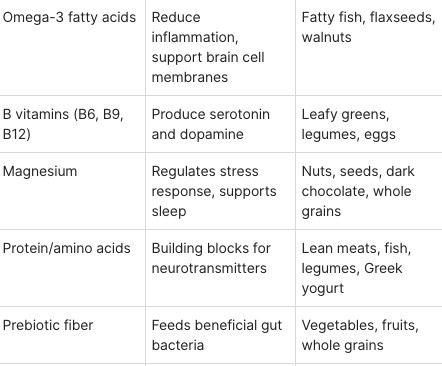
How Does the Gut-Brain Axis Influence Recovery?
Your gut and brain communicate constantly through what scientists call the gut-brain axis. When your gut microbiome is diverse and healthy, it produces compounds that reduce inflammation and support stable mood. A disrupted microbiome, common after poor nutrition or substance use, can contribute to anxiety and emotional instability.
The practical implication is straightforward: eating a diet rich in fiber from vegetables, fruits, and whole grains feeds beneficial gut bacteria. Adding fermented foods like yogurt, kefir, or sauerkraut introduces helpful bacteria. Together, these choices support the gut-brain communication underlying emotional resilience.
How Can Exercise and Nutrition Enhance Dual Diagnosis Treatment?

For people dealing with both addiction and mental health conditions, lifestyle interventions aren't optional extras—they're essential treatment components. When exercise and nutrition are included in the treatment plan alongside therapy, outcomes improve significantly.
Cognitive Behavioral Therapy (CBT) involves changing unhelpful thought patterns, requiring cognitive flexibility. Exercise-induced increases in BDNF support exactly this kind of neuroplasticity, making it easier to challenge old beliefs.
Dialectical Behavior Therapy (DBT) teaches emotion regulation skills. These capacities depend on a stable physiological baseline. When nutrition stabilizes blood sugar and exercise normalizes stress hormones, the window for learning these skills widens.
Practical pairings that work:
Morning exercise before CBT sessions to prime cognitive flexibility
Mindful movement combined with DBT distress tolerance practice
Nutrition adjustments to reduce irritability which makes emotion regulation harder
What Practical Strategies Build Sustainable Habits?
Sustainable habits don't require perfect motivation or unlimited resources. They require realistic goals, consistent routines, and support to get through rough patches.
Overcoming Common Barriers
Low motivation is common in early recovery. The solution isn't waiting until you feel motivated, it's making habits so small that motivation barely matters. A five-minute walk requires little motivation. Once you're walking, you might keep going.
Limited finances don't have to derail healthy choices. Budget-friendly nutrition centers on inexpensive whole foods: dried beans, eggs, frozen vegetables, oats, rice. Exercise requires no equipment, walking, bodyweight exercises, and online yoga videos are free.
Time constraints call for efficiency. Can you walk during lunch? Do a 10-minute routine while coffee brews? Prep meals on Sunday to save time during the week?
Cravings often signal unmet needs, stress, boredom, blood sugar instability. Regular meals with protein and fiber help stabilize blood sugar. Identifying emotional triggers lets you develop alternative responses.
Building Your Personalized Plan
Start with an honest assessment: Where are you physically and nutritionally now? What barriers have tripped you up before? What small changes feel possible?
Set SMART goals. Rather than "I'll eat healthier," try "I'll eat a protein-rich breakfast five days this week." Rather than "I'll exercise more," try "I'll take a 20-minute walk Monday, Wednesday, and Friday."
Use simple monitoring tools, a mood journal, basic activity tracker, or weekly self-assessment, to notice what's working. Small adjustments prevent setbacks from becoming complete derailments.
How Do These Habits Prevent Relapse?
Relapse rarely comes from nowhere. It usually follows accumulated stress, declining self-care, mood instability, and weakened coping capacity. Exercise and nutrition interrupt this sequence at multiple points.
When you're well-rested, nourished, and physically active, you have more cognitive bandwidth to recognize warning signs. Your stress response system isn't constantly activated. You have genuine sources of pleasure beyond substances, so cravings don't feel as urgent.
A practical daily template:
Morning: Protein-rich breakfast, brief stretching or mindfulness
Midday: Balanced lunch with vegetables, short movement break
Evening: Dinner with protein and fiber, relaxing wind-down routine
Weekly: One meal-prep session to ensure healthy options are available
The Power of Community Support
Recovery happens in relationship. Group exercise offers built-in accountability and makes movement enjoyable. A running group, yoga class, or recreational league provides regular contact with people pursuing health goals.
Recovery communities increasingly incorporate wellness elements, walking meetings, cooking together, sharing healthy recipes. The identity shift from "person who uses substances" to "person building a healthy life" is reinforced by belonging to communities focused on wellness.
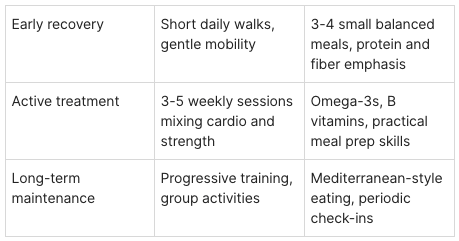
Sample Plans for Different Recovery Stages
Three-Day Sample Menu
Day 1:
Breakfast: Overnight oats with Greek yogurt, berries, and walnuts
Lunch: Salad with canned salmon, white beans, olive oil dressing
Dinner: Lentil soup with whole-grain bread
Snacks: Apple with almond butter; hummus with carrots
Day 2:
Breakfast: Scrambled eggs with spinach, whole-grain toast
Lunch: Turkey wrap with avocado and vegetables
Dinner: Baked chicken with sweet potatoes and broccoli
Snacks: Greek yogurt; handful of nuts
Day 3:
Breakfast: Smoothie with banana, spinach, protein powder, flaxseed
Lunch: Quinoa bowl with black beans and roasted vegetables
Dinner: Baked salmon with brown rice and sautéed greens
Snacks: Cottage cheese with fruit; trail mix
Phased Exercise Progression
Phase 1 (Weeks 1-4): Establish the habit with 15-20 minute walks and gentle stretching three to four times weekly. Focus on consistency, not intensity.
Phase 2 (Weeks 4-12): Increase aerobic sessions to 30-45 minutes, add twice-weekly resistance training, and try group classes for accountability.
Phase 3 (Ongoing): Diversify activities, set progressive goals, and maintain 4-5 weekly sessions using different modalities.
Taking the First Step
Recovery is built one day at a time, one choice at a time. You don't need to overhaul your life tomorrow, just take one small step today.
Maybe that step is a 10-minute walk after reading this. Maybe it's adding a vegetable to dinner. Maybe it's reaching out about a local yoga class.
Whatever that first step is, trust that it matters. Neurobiological changes start with the first walk. Nutritional benefits begin with the first balanced meal. Habits build from the first day of consistency.
Your brain is capable of remarkable healing when given the right conditions. Exercise and nutrition create those conditions. Combined with therapy, support, and your commitment, they form a foundation strong enough to build a life worth living.
One step, one meal, one day at a time.
Sources : 2024 systematic review on physical exercise in SUD treatment (Nazmin et al.).
Nutrition and behavioral health disorders: depression and anxiety
Exercise-based treatments for substance use disorders: evidence, theory, and practicality

Dunham House
About Dunham House
Located in Quebec's Eastern Townships, Dunham House is a residential treatment centre specializing in addiction and providing support to individuals with concurrent mental health challenges. We are the only residential facility of our kind in Quebec that operates in English.
Our evidence-based programs include a variety of activities such as art, music, yoga, and equine-assisted therapy. In addition to our residential services, we offer a full continuum of care with outpatient services at the Queen Elizabeth Complex in Montreal.