
What Functional Addiction Looks Like: Recognizing High-Functioning Addiction Signs and Understanding Its Ongoing Impact
Functional addiction refers to a substance use disorder in which an individual maintains work, family, or social roles while concealing significant problems. This article summarizes core signs, everyday manifestations, and family impact. It outlines treatment pathways available at Dunham House, a Canadian centre offering integrated care for addiction and co-occurring mental health conditions.

Key Takeaways
Functional addiction: outward normalcy despite problematic substance use.
Look for emotional distress, declining self-care, and strained relationships.
High functioning and rationalization often delay recognition.
Changes tend to be subtle rather than dramatic.
Treatment ranges from inpatient to outpatient and integrated dual diagnosis care.
Family support helps rebuild trust and improve communication.
Families may face emotional and financial consequences.
Early recognition and professional treatment improve outcomes.
What Are the Key Signs and Symptoms of Functional Addiction?
Signs are often subtle and intermittent; note persistent anxiety or low mood, reduced self-care, and growing tension with close contacts. These patterns warrant clinical assessment for an underlying substance use disorder.
Emotional Distress: Anxiety, depression, or irritability that coincides with substance use.
Neglecting Self-Care: Declines in hygiene, diet, sleep, or medical care.
Impact on Relationships: Increasing conflict, secrecy, or withdrawal from loved ones.
Timely recognition enables referral to evidence-based care.
How Does Functional Alcoholic Behavior Manifest in Daily Life?

Functional alcoholic behaviour may include secretive drinking, withdrawal, and gradual neglect of duties while preserving a successful exterior.
Isolation from Family: Withdrawing to hide consumption.
Secretive Behavior: Drinking alone, hiding supplies.
Neglecting Responsibilities: Missed tasks or declining performance despite apparent success.
These patterns fuel denial and delay help-seeking.
What Are the Common Symptoms of a High-Functioning Addict?
High-functioning individuals may show increased tolerance, use substances to cope, and make repeated unsuccessful quit attempts despite awareness of harm.
Increased Tolerance: Needing more to achieve previous effects.
Using Substances to Cope: Reliance on substances for stress or emotional relief.
Failed Attempts to Quit: Repeated relapse or inability to stop despite attempts.
These features guide targeted, individualized treatment planning.
How Does Functional Addiction Differ from Traditional Addiction?
The primary difference is preserved role functioning: people maintain jobs and social roles while the disorder advances. Denial and gradual behavioral shifts conceal severity.
High Functioning: Competent performance can mask problems.
Denial and Rationalization: Belief in control prevents acknowledgment.
Subtle Behavioral Changes: Slow, less obvious shifts in routine or mood.
Proper assessment distinguishes functional presentations and informs care choices.
What Distinguishes Functional Addiction in Clinical Research?
Research links functional addiction with traits like perfectionism, self-medication for anxiety or depression, and the need for integrated treatment to address co-occurring conditions.
Psychological Traits: Perfectionism and high achievement are common contributors.
Self-Medication: Substance use as a coping strategy for mood or anxiety symptoms.
Integrated Treatment Needs: Better outcomes when mental health and addiction are treated together.
Applying these findings supports comprehensive, evidence-based care.
Why Is Functional Addiction Often Overlooked in Diagnosis?
High functioning, denial, and fear of stigma reduce disclosure and lead to underdiagnosis and treatment delays.
High Functioning: External success can mislead clinicians and families.
Denial and Rationalization: Individuals downplay their use.
Stigma and Confidentiality Concerns: Fear of judgment inhibits help-seeking.
Reducing these barriers improves recognition and access to care.
What Are the Treatment Options for Functional Addiction at Dunham House?
Dunham House offers a continuum of care tailored to functional addiction, including structured inpatient care, flexible outpatient services, and integrated dual diagnosis programmes for co-occurring disorders.
Inpatient Programs: Intensive support in a structured setting.
Outpatient Programs: Flexible therapy that fits daily responsibilities.
Integrated Treatment for Dual Diagnosis: Concurrent treatment of addiction and mental health conditions.
Programs combine clinical care and therapies aimed at reducing relapse risk.
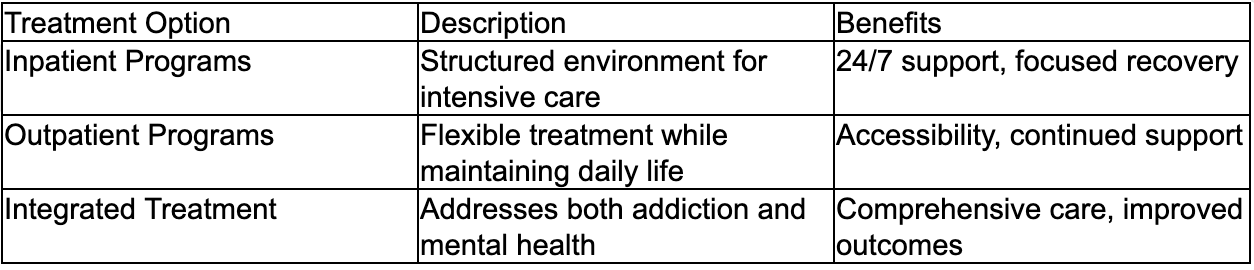
The table summarises Dunham House options and their benefits across a continuum of care.
How Does Dual Diagnosis Treatment Address Co-occurring Mental Health Disorders?
Dual diagnosis care integrates assessment and treatment for substance use and mental health simultaneously, with coordinated planning and evidence-based therapies to improve recovery prospects.
Initial Assessment: Comprehensive evaluations to identify co-occurring needs.
Coordinated Care: Joint plans that address both conditions.
Evidence-Based Therapies: Proven modalities delivered within an integrated model.
Treating both conditions together increases the chance of sustained recovery.
What Role Does Family Support Play in Recovery Outcomes?

Family involvement supports trust rebuilding, better communication, and a stable recovery environment; family-inclusive practices align with best-practice recovery models.
Rebuilding Trust: Repairing damaged relationships supports engagement.
Improving Communication: Clear, open dialogue reduces conflict.
Creating a Supportive Environment: Home stability reinforces treatment gains.
Structured family participation can bolster long-term outcomes.
How Does Functional Addiction Impact Families and Why Is It Still a Problem?
Functional addiction causes strained relationships, financial strain, and emotional trauma that complicate recovery for both the individual and relatives; addressing these impacts requires systemic, family-sensitive interventions.
Strained Relationships: Tension and conflict are common.
Financial Instability: Substance use can create economic hardship.
Emotional Trauma: Relatives often experience lasting distress.
Interventions should consider the family context to restore stability.
What Are the Emotional and Social Effects on Family Members?
Family members frequently face emotional burden and social disruption; education, communication skills, and coping resources help reduce these effects and support recovery roles.
Enhanced Understanding: Knowledge of addiction aids coping.
Improved Communication: Skills training fosters healthier interactions.
Coping Strategies: Support groups and resources provide practical tools.
These measures strengthen family resilience.
How Can Families Recognize and Support a High-Functioning Addict?
Families can act by learning the signs, responding with empathy, and encouraging professional assessment and treatment to increase the chance of engagement with services.
Educating Themselves: Learn common signs and patterns.
Practicing Empathy: Approach conversations with compassion.
Encouraging Professional Treatment: Support steps toward clinical help.
Practical and emotional family support complements formal treatment.
Conclusion
Early recognition and integrated treatment of functional addiction reduce harm and improve outcomes for individuals and families. Programs such as those at Dunham House use evidence-based and dual diagnosis approaches to support recovery and relationship repair. Seeking assessment and engaging with professional care are important first steps toward sustained recovery.

Dunham House
About Dunham House
Located in Quebec's Eastern Townships, Dunham House is a residential treatment centre specializing in addiction and providing support to individuals with concurrent mental health challenges. We are the only residential facility of our kind in Quebec that operates in English.
Our evidence-based programs include a variety of activities such as art, music, yoga, and equine-assisted therapy. In addition to our residential services, we offer a full continuum of care with outpatient services at the Queen Elizabeth Complex in Montreal.