
Depression Lives in Your Body, Too. And That Matters for Dual Diagnosis Recovery.
TL;DR: A massive brain imaging study (23,417 people) found that depression shrinks motor and visual brain regions, not just the mood centers. For people in dual diagnosis recovery, this explains why your body feels heavy and the world looks flat, and it's not laziness or lack of willpower. It's structural brain change. Treatment programs need to address the body alongside the mind, with movement-based therapies, adjusted physical expectations in early recovery, and screening for motor and sensory symptoms. The study also debunked two long-held beliefs: hippocampal shrinkage in depression (didn't hold up at scale) and the "disconnection syndrome" model. Both findings reshape how clinicians should think about co-occurring addiction and depression.
A new study involving more than 23,000 people has challenged long-held beliefs about depression and the brain. For those living with both depression and addiction, the key takeaway is that depression impacts not only the areas of the brain responsible for thinking and mood, but also the regions that control movement, vision, and how your body senses its position.
If you are recovering from substance use and have been told that your heavy limbs, dull vision, or trouble getting off the couch are "all in your head," this research offers a different perspective. These symptoms are in your brain, but not in the areas anyone expected.

The Study That Rewrote the Map
Researchers at Washington University combined brain scans from six large studies, resulting in a sample of 23,417 people. Earlier studies on depression used much smaller groups, often just a few hundred participants. Those earlier findings seemed reliable, but when tested with a larger group, many did not hold up.
The Washington University team did confirm some expected results. They found that gray matter and cortical surface area were reduced in the frontal cortex, anterior cingulate, and insula, areas of the brain that help regulate mood. This was not surprising.
The surprises came in two places.
First, the hippocampus. For many years, researchers believed that depression caused the hippocampus to shrink. This idea appeared in textbooks and was often mentioned by clinicians. However, in this large study of 23,000 people, that connection did not hold up. The researchers said it "did not emerge as a reliable correlate."
Second, and especially important for dual diagnosis treatment, the study found that the somatomotor and visual regions of the brain had reduced volume and surface area. These areas control how you move and how you see. Depression research has rarely focused on these regions before.
Your Body Knows Before Your Mind Does
Think about how depression appears in your daily life, apart from feeling sad. Your arms and legs might feel heavy. Even walking to the kitchen can seem harder than it should. Colors may look less bright, and your side vision might seem limited. You might describe it as "moving through mud" or "seeing the world through a dirty window."
Clinicians have often seen these physical symptoms as results of a low mood. If you feel sad, you move more slowly. If you feel hopeless, the world seems gray.
This study offers a new explanation. The motor and visual areas of your brain are shrinking. These physical symptoms may have their own neurological cause, separate from mood. Your body feels heavy not just because you are sad, but because the parts of your brain that control movement have changed.
For someone in treatment for both depression and addiction, this difference is important.
Dual Diagnosis and the Body Problem

Substance use disorders and depression frequently co-occur and can involve overlapping processes, including stress regulation, reward processing, and inflammatory signalling. Both conditions have been associated with changes in dopamine-related reward circuits, although the pathways and effects vary by substance, symptoms, duration of use, and individual factors. Co-occurrence can be linked to greater clinical complexity and functional impairment, but it is not accurate to state broadly that the combination causes “greater brain damage” than either condition alone.
Still, most dual diagnosis programs treat depression mainly as a problem with thoughts and feelings. Cognitive behavioural therapy focuses on thought patterns. Talk therapy helps with emotions. Medication changes neurotransmitter concentrations. These treatments can help, but they are not enough if depression is also changing the parts of your brain that control movement and senses.
The difference between what treatment targets and what depression actually does to the brain has often been overlooked. Clients talk about it. They say their bodies won't cooperate, that the world looks flat, sounds dull, and food has no taste. Clinicians have called these symptoms anhedonia or psychomotor retardation, and usually treated them as side effects of mood problems. The Washington University study suggests these symptoms are actually primary neurological issues.
Think about what early recovery is like. You are in a residential treatment center. Your clinician asks you to join group therapy, go for a walk, or take part in activities. Your depression makes these things difficult, and the problem is not just motivation or willpower. The motor areas of your brain may have changed physically. It takes more effort for your body to respond than it does for someone without depression.
Being physically active is a key part of addiction recovery. Exercise helps reduce cravings. Moving your body helps control stress. Taking part in activities helps rebuild social connections. If depression has affected your motor cortex, your treatment needs to consider that. Telling someone to "push through" a brain-based problem does not help recovery. It only leads to shame.
The Disconnection Myth

The Washington University study also found something important for dual diagnosis treatment. With all 23,417 participants, the researchers did not find consistent differences in how brain regions connect between people with and without depression.
This challenges the "disconnection syndrome" model of depression, the idea that brain regions stop communicating with each other. That model has influenced treatment design for years. Therapies targeted at restoring brain connectivity, from neurofeedback to certain medication protocols, rest on this assumption.
For dual diagnosis patients, the disconnection model has been appealing because addiction additionally disrupts brain connectivity. Treating both disorders through a connectivity lens seemed elegant. The new data suggests the model may be too simple, or wrong.
Brain structure, not brain communication, appears to be the more reliable marker of depression. And when you combine structural brain changes from depression with structural brain changes from chronic substance use, you're looking at a compounding problem that requires a more integrated response.
Rethinking Treatment at the Body Level
If depression changes your motor cortex and visual processing regions, treatment needs to address those systems directly. A dual diagnosis program that treats the thinking brain and the feeling brain but ignores the moving body is working with an outdated map.
At Dunham House, we look at addiction and mental health as concurrent conditions, not separate problems requiring separate solutions. The findings uphold why that integration matters, and why our programming includes physical and somatic interventions alongside clinical therapy.
Applied uses of this research look like:
Adjusting expectations around physical participation in early recovery. A client whose motor cortex has been affected by depression needs gradual re-engagement, not a rigid activity schedule. Clinicians can distinguish between resistance (a behavioural pattern) and neurological limitation (a brain structure issue) and respond accordingly.
Incorporating body-based therapies with more clinical specificity. Movement therapy, somatic experiencing, yoga, and structured exercise aren't lifestyle add-ons. They're interventions that target the brain regions this study identified as affected by depression. In a dual diagnosis context, where the body has also been altered by substance use, these approaches do double duty.
Screening for motor and sensory symptoms of depression alongside affective and cognitive symptoms. If a client reports that their body seems heavier than usual, that colours look washed out, or that physical tasks require disproportionate effort, those symptoms now have neurological backing. They belong in a clinical assessment, not in the "other complaints" section.
Reassessing medication protocols. If depression's effects on motor and visual regions operate through different mechanisms than its effects on mood, a single medication approach may miss parts of the problem. Dual diagnosis care already calls for careful medication management because of substance use history. A few antidepressants carry addiction risk. Others interact with substances that may still be clearing from a client's system. Adding the question of whether a given medication reaches the motor and visual cortex alongside the prefrontal cortex gives prescribing psychiatrists a more complete clinical picture to work with.
Training clinical staff to recognize body-level depression symptoms as neurological rather than behavioral. When a client in residential treatment can't get out of bed, the default interpretation often falls into two camps: they're depressed (treat the mood) or they're resistant (address the behavior). The Washington University data points to a third interpretation: their motor cortex has been structurally altered by depression, and their body's response to commands from the brain is compromised. That interpretation leads to different interventions, different language in clinical notes, and different conversations between staff and clients about what recovery asks of them.
The Hippocampus Question
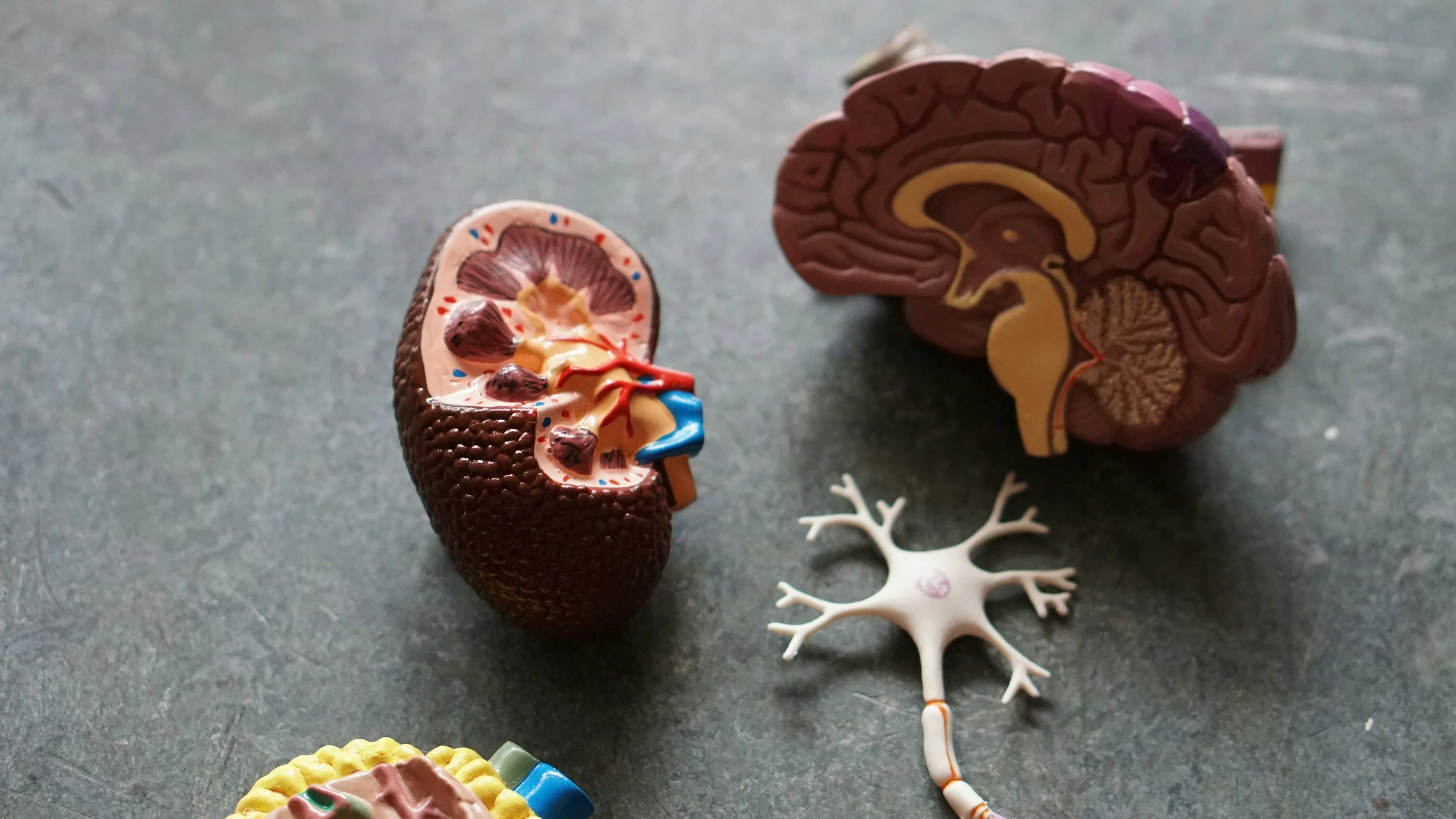
The study's failure to replicate hippocampal shrinkage in depression also has dual diagnosis implications. The hippocampus plays a central role in memory storage and learning. Alcohol use, opioid use, and other substance use disorders damage the hippocampus through separate pathways. If depression alone doesn't shrink the hippocampus but substances do, clinicians can make more targeted attributions about a client's memory and learning difficulties.
A client struggling to retain information from psychoeducation groups may be dealing with substance-related hippocampal damage, not depression-related cognitive impairment. That distinction reshapes the treatment plan, the pace of programming, and how clinicians evaluate progress.
It also changes how families understand their loved one's recovery. A partner or parent watching someone return from treatment and struggle to remember therapy concepts might assume the depression is getting worse. A clinician who understands the hippocampal distinction can explain that the memory difficulty traces to substance use history, that depression treatment is working on a different front, and that progress will look uneven through different brain systems. That kind of clinical exactness reduces family conflict and sets more realistic expectations for what early recovery involves.
Recovery Asks Everything of Your Brain

Recovery from co-occurring depression and addiction demands coordination across the full brain. You need mood regulation to manage cravings. You need mental adaptability to learn new coping strategies. You need motor function to participate in your own recovery, to walk into a group room, to hold a pen during journaling, to show up for a meal when your body is telling you to stay in bed. You need sensory processing to relate to the world you're rebuilding, to notice the texture of grass under your feet during a mindfulness exercise, to make eye contact in a therapy session.
When treatment targets mood and cognition but leaves motor and sensory deficits unaddressed, recovery develops blind spots. A client might stabilize emotionally through therapy and medication but still struggle to get through a basic daily routine because the motor and visual regions of their brain remain affected. That struggle looks like non-compliance to an untrained eye. It looks like someone who isn't trying. In reality, it's someone whose brain is fighting them on a level that talk therapy doesn't reach.
Lead author Kassandra Hamilton is planning follow-up research to test whether structural differences in visual and somatomotor brain regions relate to particular depression symptoms rather than to overall symptom severity alone. If replicated, this work could help researchers better characterize biologically distinct symptom profiles within depression. It is too early, however, to conclude that clinicians can match treatments to motor versus cognitive symptom profiles on the basis of these findings; that would require prospective clinical research showing that such matching improves outcomes.
For dual diagnosis care, this kind of precision is overdue. Addiction and depression interact differently in each person. The combination produces different symptom profiles, different healing trajectories, different vulnerabilities to relapse. A one-size approach has never served this population well. Research that maps depression's effects across separate brain systems gives treatment teams a more detailed foundation to build on.
The Washington University study gives clinical teams neurological evidence that depression is a whole-brain, whole-body condition. For people facing both depression and addiction, that evidence validates what they've been experiencing. The weight in your body is real. The flatness in your vision is real. Treatment should respond to all of it.

Dunham House
About Dunham House
Located in Quebec's Eastern Townships, Dunham House is a residential treatment centre specializing in addiction and providing support to individuals with concurrent mental health challenges. We are the only residential facility of our kind in Quebec that operates in English.
Our evidence-based programs include a variety of activities such as art, music, yoga, and equine-assisted therapy. In addition to our residential services, we offer a full continuum of care with outpatient services at the Queen Elizabeth Complex in Montreal.