
World Homelessness Day: where addiction, mental health and housing loss meet
How does a person end up sleeping outside?
If you ask that question you'll typically get one of two answers: bad choices or bad luck. Neither of those explanations lasts for long when you actually look at who is in the shelters and encampments in Quebec right now and what most of them were dealing with prior to losing their home.
Today is World Homelessness Day (October 10th). Most of the coverage will be of the tents and the shelter line-ups. We want to talk about the earlier phase of the process, the phase that often starts many years earlier when untreated addiction and mental illness are quietly doing their damage and there are still a lot of doors open.
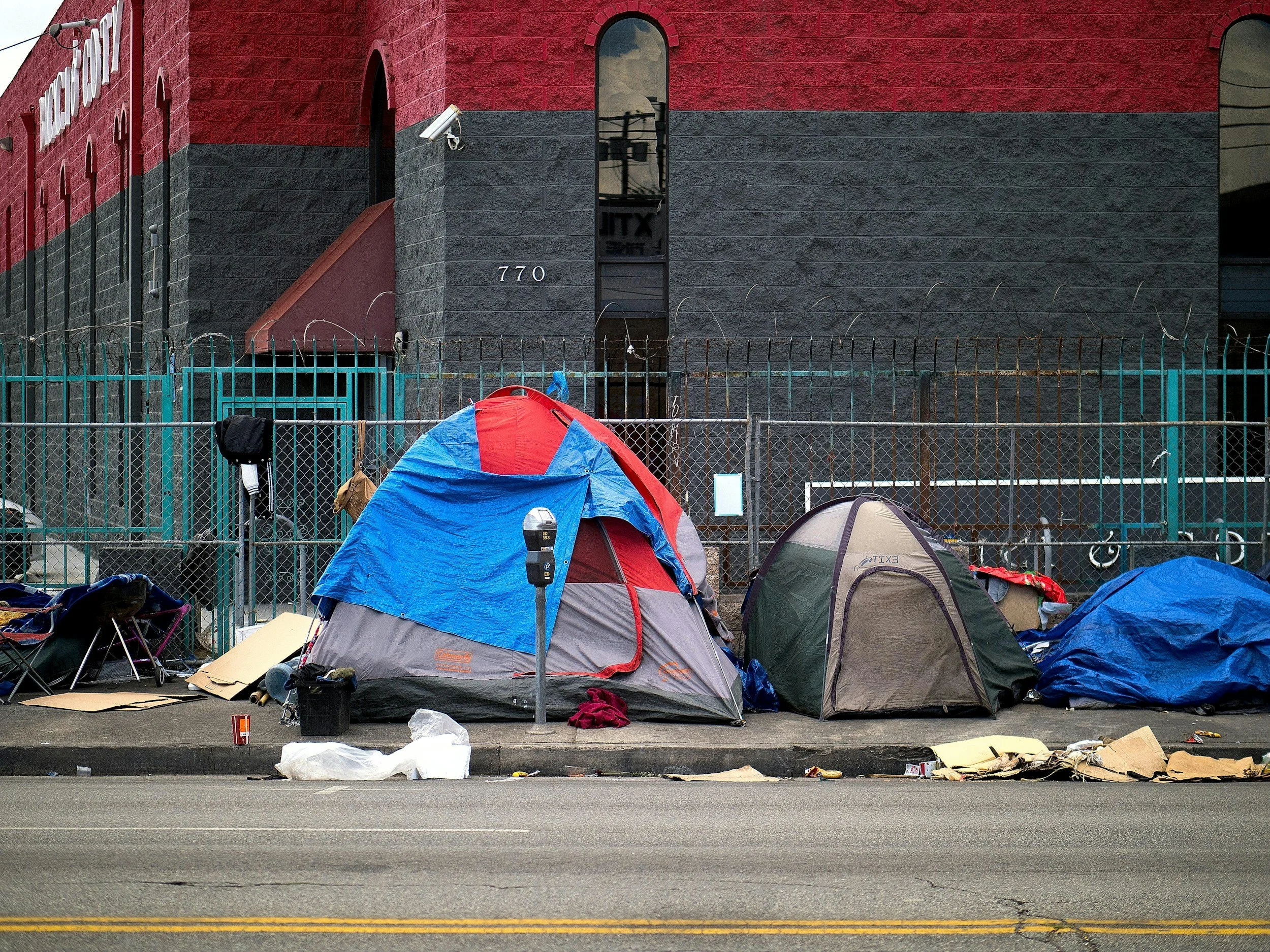
What the numbers say in Quebec and in Estrie
In spring 2025 Quebec did its third province wide count of visible homelessness. On one night they found 12,077 people in shelters, transitional housing, encampments and on the streets. That's roughly 20% more than the 2022 count.
In Estrie (our region) it was 718 people, about 133 per 100,000. A good deal of the region is rural and so homelessness is very much invisible here. You could have someone living in a camper right at the edge of a field outside of Cowansville, or someone rotating between family members in Magog and they would never be picked up in a one night count.
Those numbers only reflect visible homelessness. They don't include the man sleeping in his car behind a grocery store on Sherbrooke, the woman who's been on her third friend's couch since spring, the father who's been "staying with his brother for a couple of weeks" since February. Anyone who does outreach will tell you the actual number is much higher.
Federal data supplements what the street count can't provide. The data from Canada's coordinated point-in-time counts (2020 to 2022) shows that 40,713 people experiencing homelessness were counted across 72 communities:
61% reported a substance use issue
60% reported a mental health issue
Substance use was the second most common reason people gave for losing their last home, cited by 18%
60% on both counts. The report doesn't give us the number who said yes to both, but with the numbers quoted it's safe to assume a significant number of them must have said yes to both.
Which comes first, the addiction or the street?
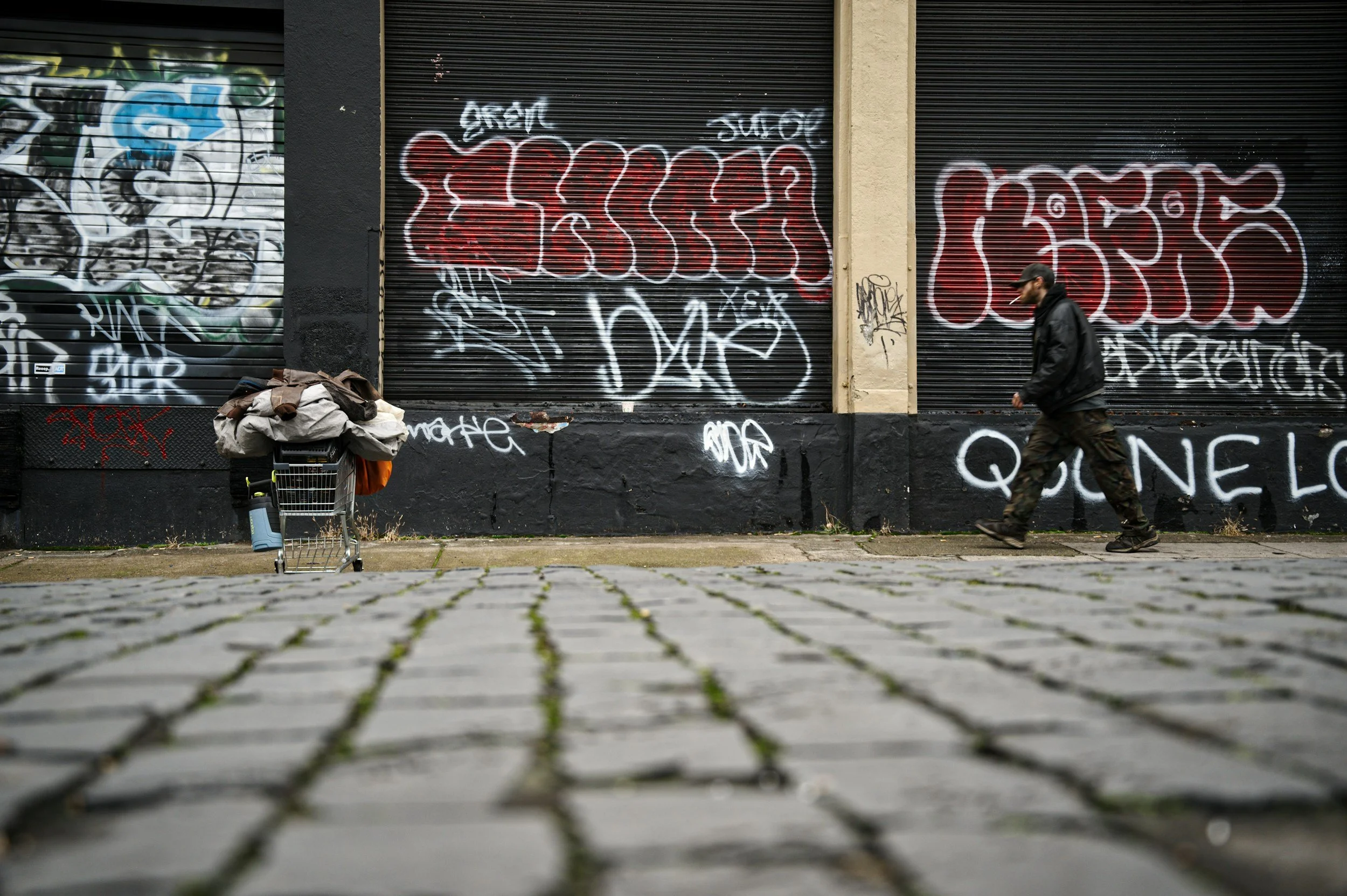
People like a clean causal line. The drinking cost him the apartment. Or: living outside is what got her using. In real life it's a two way street, usually within the same individual and by the time you're in a shelter the sequence of events doesn't really matter any more.
Here's a pattern that clinicians see all the time. Depression, anxiety or trauma is completely unrecognised for years. Alcohol, opioids, cannabis or stimulants begin as a way of sleeping, a way of getting through a shift, a way of taking the edge off the panic that just never really goes away. It escalates. Work becomes erratic and then ceases altogether. The people around them start to pull away, they're simply worn out and that's of huge significance as family and friends are often the very last safety net between a person and a shelter bed. The rent is missed once, then three times.
Then the street just makes it all worse. No real sleep at all. Constant low level threat. It's cold. You can't keep your medication anywhere, you have no address to put appointment letters to, your phone is dead half the time. Anxiety and paranoia are through the roof. The only way you can get through a night is with substances.
That is dual diagnosis at its most naked: two disorders feeding off each other and with all the stable ground that treatment is built on having been removed.
Why treating only one side keeps failing

Just over half of those with a SUD will also have a co-occurring mental health condition. Depression, PTSD, anxiety disorders, ADHD and bipolar disorder are all frequently seen. If care is only focused on one of these then the other one will continue to be a problem.
You can see the cost of that split in the way people move through services. One person finishes detox and goes straight back to the same untreated depression that was the original driver of the substance use. Another person gets stabilised on a psychiatric unit and is discharged while still drinking heavily. Each service sees half a person. Each discharge is a chance for things to slip a little further and for someone without a stable home, a little further can be another winter outside.
Integrated treatment means looking at both conditions from the outset and treating them as one clinical picture. For the vast majority of people where addiction and mental health are intertwined that is the only version of care that has any realistic chance of working.
The slide usually starts well before the street
Very few people go from a stable life to a shelter in one go. Housing loss is at the very end of a long slope and the earlier stages of that slope are perfectly ordinary on the surface.
A sick day that becomes a pattern. A DUI. Borrowing from the parents "just until next month". A prescription for the antidepressants that just sits in your coat pocket. A separation and a move into something smaller and further away from work. A first missed rent payment.
We're not putting those out there to scare the bejeezus out of anyone. If you see yourself or someone you know on that list then the good news is that every single one of those points is a point at which help is available. Treatment is so much more effective when a person still has a job to go back to, when they're the one to pick up the phone and walk through the door with their name on the lease. That's true in a residential setting and it's true in a community clinic.
If you're a family member watching this happen
Families are often the very last line of defence before they end up homeless and by the time they're actually starting to look for answers they're generally absolutely drained. A few of the things we hear are:
Keep a line open, even when you close your wallet
Stopping the rent payments and staying in someone's life can go hand in hand. A lot of families will find that "I'm not paying for this any more and I still want to see you on Sunday" is the hardest thing they've ever had to say and it's also the thing that actually makes the difference.
Learn where support ends and enabling starts
Covering a shift you missed, paying a debt to get a crisis to go away rather than bringing it up because the last time you did it went badly. Those are choices that come from love. They can also be a route by which the substance use can continue. That line is very difficult to find on its own and it's a skill you can learn.
Have the information ready
Moments of willingness are going to be fleeting. You need to know which schemes are out there, what the entry requirements are and what it will cost you before the night your person finally says "right, perhaps I'll do it".
Where Dunham House fits, and where it doesn't

Dunham House
We need to be clear on this. Dunham House is a residential treatment centre in the Eastern Townships.
We are not a shelter and we are not the appropriate first point of contact for someone who needs a bed tonight.
If you or someone near you is in a housing or mental health crisis right now:
811, option 2, connects you to Info-Social, Quebec's free psychosocial line, 24/7
9-8-8 is the suicide crisis helpline, by call or text, anywhere in Canada
In Sherbrooke, Partage Saint-François runs emergency shelter and support services
911 if someone is in immediate danger
Where we do fit is at the earlier part of the slope: the person who is still in a house but clearly losing ground, the professional whose drinking and depression are now manifesting at work, the family who can see where this is all heading.
Every program at Dunham House is around dual diagnosis. The substance misuse and the mental health aspects are both assessed by a licensed clinical team from day one and each individual is then given a tailored plan which treats them as one picture rather than two separate issues. That plan will be different for each individual depending on their needs.
A 30-day intensive for stabilization and a full dual diagnosis assessment
A 90-day program for deeper work and a stronger foundation
Outpatient care for people who need serious clinical support while keeping their job and home
A family program that helps spouses, parents and adult children rebuild their footing too
Aftercare planning starts prior to discharge as the weeks after a program ends are the period when people are most at risk
One thing you can do today
World Homelessness Day can quite easily become a day of sad statistics and then that's it. So pick one thing.
Drop off your winter clothing or a donation at a local shelter. Text the friend who went quiet in August. Get yourself up to speed on dual diagnosis so that the next time someone says "he just needs to stop drinking" you've got something better to say.
Watch the words. "Homeless addict" reduces a whole person down to two problems. "Someone experiencing homelessness who lives with an addiction" is awkward to say and less elegant, but it's more accurate because both of those things can change. The people it applies to will notice which version you use.
And if it's you or someone in your household that you're concerned about then we're here. Call us on 450-263-3434. No pressure, no commitment, just a chat with someone who gets it from both sides.
Dunham House
About Dunham House
Located in Quebec's Eastern Townships, Dunham House is a residential treatment centre specializing in addiction and providing support to individuals with concurrent mental health challenges. We are the only residential facility of our kind in Quebec that operates in English.
Our evidence-based programs include a variety of activities such as art, music, yoga, and equine-assisted therapy. In addition to our residential services, we offer a full continuum of care with outpatient services at the Queen Elizabeth Complex in Montreal.