
Why There's No Universal Formula for Dual-Diagnosis Recovery
You've heard it all by now, haven't you?
Practice meditation every day. Journal in the evenings. Cold showers. Eliminate sugars. Twelve step recovery programs. SMART Recovery groups. Yoga. Get more active. Get more sleep. Breathe differently. Eat like this. Don't eat like that. Find a sense of meaning. Detach from negative people. Heal your relationships.
When you're dealing with both an addiction and mental health concerns, the din increases exponentially. Double the diagnoses means double the suggestions, conflicting ideas, and pressure to get it all "right." Recovery can sometimes feel less like the road map it should be and more like being placed between two lanes of speeding cars.
Here's the reality of recovery that's rarely voiced aloud: You don't have to do all of that.

The Problem With the One-Size-Fits-All Approach to Dual Diagnosis Recovery
The problem with wellness programs and recovery formulas was recently captured in a study published in Psychology Today. According to research psychologist Dr. Sherry Hamby, based on studies including more than 20,000 participants from ten countries, what people need most isn't a bigger to-do list. It's a realistic understanding of what strengths they already have and what weaknesses they need to work on. The author refers to this as the resilience portfolio approach.
In this framework, the focus shifts away from the endless number of possible solutions toward four domains in which people require sufficient resilience to flourish amid challenges: meaning-making, regulation, relationships with others, and physical surroundings. People don't need to be excellent in every domain. They need a balanced portfolio in which all four factors are covered.
As anyone familiar with concurrent disorder treatment knows, a generic approach to recovery yields generic outcomes. An individual seeking help for major depression and alcohol dependence is a very different client than someone battling anxiety and addiction to opioids, who is very different from another person with PTSD and a stimulant dependency.
The Four Domains Required for Concurrent Disorder Recovery
Let's explore each domain in detail, in relation to concurrent disorders.

Meaning-making involves reconnecting with something larger than the problems at hand. This includes the ability to see purpose or hope in one's life, a personal and cultural identity, and a sense that the world has a direction that one might be moving in. Over time, addiction chips away at a person's ability to connect with meaning and replace it with dependence on drugs or alcohol. As mental health issues worsen, meaning becomes harder to achieve because the individual is increasingly preoccupied with self-preservation.
While the process of recovery may not be inherently optimistic, the task in the meaning-making domain is to provide the opportunity for people to regain a sense of purpose without forcing anything on them. It's about fostering the right environment and providing enough stillness and space to find meaning again.
Regulation includes a range of skills necessary for a person to cope with life challenges without losing emotional control. It involves the ability to cope with difficulties, maintain one's balance of positive feelings, and generally navigate life in a healthy manner. Here, we're talking about evidence-based techniques such as DBT and CBT therapy, which address emotional dysregulation. These therapies are core elements of quality concurrent disorder programs.
This is where generic wellness advice falls short: You can't regulate your way out of an unhappy life. If your recovery routine revolves around diet, exercise, and behavioral management, then you haven't tackled the real problems. In concurrent disorder treatment, it's critical to understand that regulating one's life is necessary but insufficient to make it happy and fulfilling.
Interpersonal relationships are a crucial component of resilience and, therefore, recovery. Nobody recovers alone. Social support and connections to other people form the basis of long-term wellness. Thus, programs that do not emphasize family programming aren't complete.
Often, a person's family members have been coping with his/her illness in one way or another for years, and they have developed certain patterns as a result. Simply leaving rehab without resolving the underlying issues in relationships isn't an option. Family support becomes imperative in order to foster healthier interactions with loved ones and improve quality of life.
Physical environment is a factor that many individuals ignore at their peril. Multiple studies show that spending time outdoors in natural settings is equivalent in effect to psychotherapy or medications for boosting mental wellbeing. Moreover, research has shown that the physical setting of the program itself has a significant impact on its effectiveness.
What Makes Residential Dual Diagnosis Treatment So Effective
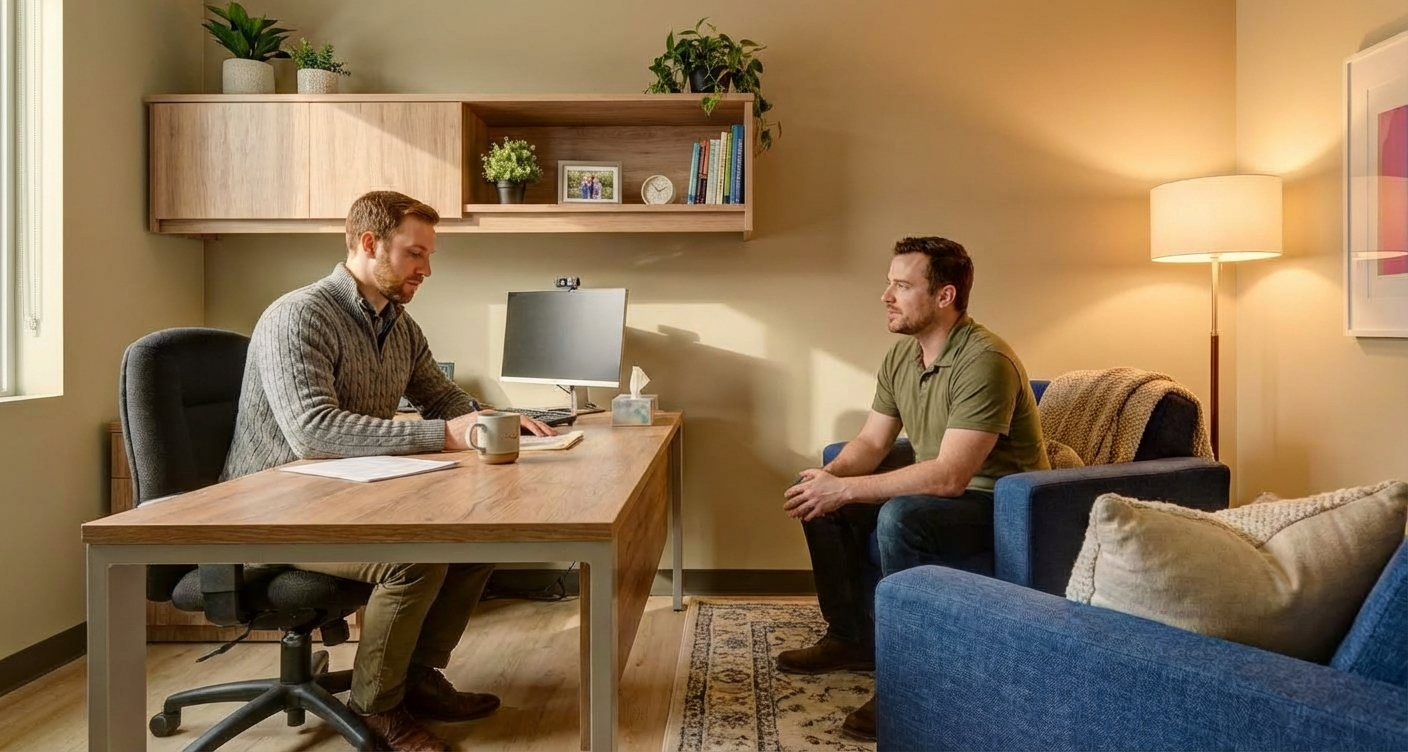
Residential treatment programs serve a distinct structural purpose: To create a new environment, in which a client has an opportunity to strengthen his/her resilience in multiple dimensions without external stressors. One hour-long session per week in the same environment that contributed to the development of substance abuse disorder won't cut it.
The structure of residential care allows clinicians and therapists to create conditions where a person has the chance to build resilience in multiple spheres at once: Learn to see and appreciate meaning-making, practice and learn regulating behaviors, develop relationships, and enjoy a new physical environment that promotes well-being.
At Dunham House, our facility in the Eastern Townships of Quebec is designed to help clients recover in a conducive environment. Our horticultural programming is not an optional addition; it serves as an effective way to promote meaning-making in a natural environment and practice regulation skills.
The rural setting and removal from a hectic city environment is another important factor in our treatment philosophy. Finally, our English-language program is designed to allow English-speaking clients to communicate in their native language without the stress of having to switch into a second language, which some residential programs in Quebec cannot guarantee.
Dual Diagnosis Requires a Concurrent Treatment Strategy
Probably the most important aspect that makes our approach to concurrent disorders unique is that we don't prioritize treating one condition over another, allowing a person to manage one disorder during treatment of another. The approach to addiction treatment after dealing with mental health concerns, or vice versa, is less successful than concurrent therapy.
That's because one issue exacerbates the other. Depression worsens substance abuse, which leads to unstable mood. Often, addiction stems from childhood trauma or unresolved issues, which contribute to mental health symptoms. Separating issues for treatment purposes doesn't resolve them.
In concurrent disorders treatment, the objective is to treat both problems as parts of the same puzzle. Clinicians in a comprehensive concurrent disorder program understand the linkages and work simultaneously on several areas to address the whole picture, not just its segments.
The Resilience Portfolio Approach in Dual Diagnosis Care
So, why does the approach that recognizes four resilience domains fit our treatment philosophy perfectly? Because each of the domains plays a role in creating comprehensive wellness programs for concurrent disorders. People cannot become great in everything, but a strong portfolio in four spheres ensures long-term resilience and wellness.
Thus, a quality dual diagnosis program should incorporate all four dimensions of recovery: Meaning, regulation, relationships, and the physical environment in which a client will spend time. Clients need to identify areas where their skills are currently weak, and choose to work on those.
This, in turn, requires an open-ended and personalized approach where therapists and clinicians are free to adjust plans according to clients' needs and progress. No two concurrent disorders are identical, so a cookie-cutter approach will not produce positive outcomes.
The Noise Won't Be Going Away. You Need a Built-In Filter.

Overwhelming amounts of information can have a detrimental effect on a person's recovery because he/she might start to believe that it's impossible to get better until all issues are figured out. Nothing could be further from the truth: Wellness begins when a person finds a program in which he/she can work on all problems simultaneously without unnecessary complications.
In essence, clients need a structured environment where they'll receive a personalized evaluation to determine what is working for them and what skills need improvement. The resilience portfolio approach can act as a guide to assess the four domains and select appropriate activities.
Not everyone can be perfect in all domains, and you don't have to. The objective is to ensure you have enough strength in multiple areas for a stable life.
It's a pretty ambitious goal, especially when you realize how many years you might have been coping with concurrent disorders and trying to juggle life, work, and relationships. That's precisely what recovery is for.
Dual Diagnosis and Concurrent Disorder Options in Quebec
There are countless options and countless approaches to recovery. All of them claim success. All of them seem rational.
You know better than to accept every promise. So ask questions. Does the program truly take a concurrent approach, addressing mental health and addiction simultaneously? Is the program based on evidence-based techniques such as DBT and CBT? Are there opportunities to involve loved ones in the recovery process, not only as observers? Is the environment conducive to healing?
Finally, if you're an English-speaking individual in Quebec, one additional question deserves asking: Will you be able to participate in therapy in your first language?
Dunham House is Quebec's English-language residential centre for concurrent disorder programs. Set amidst 85 acres in the Eastern Townships of Quebec, we offer residential dual diagnosis programs ranging from 30 days up to six months. Our outpatient program lasts 12 weeks and takes place at the Queen Elizabeth Health Complex in Montreal. The six-week Family Program is also available.

Dunham House
About Dunham House
Located in Quebec's Eastern Townships, Dunham House is a residential treatment centre specializing in addiction and providing support to individuals with concurrent mental health challenges. We are the only residential facility of our kind in Quebec that operates in English.
Our evidence-based programs include a variety of activities such as art, music, yoga, and equine-assisted therapy. In addition to our residential services, we offer a full continuum of care with outpatient services at the Queen Elizabeth Complex in Montreal.