
Does Insurance Cover Addiction Treatment in Canada? A Complete Guide for Quebec Residents Considering Dual Diagnosis Rehab
Cost is almost always the first thing people think about when they consider residential addiction treatment. Not because they don't want to get better, but because the question feels urgent and nobody seems to answer it directly. So let's do that.
Private inpatient rehab in Canada is not cheap. A 30-day program at a dual diagnosis treatment centre typically runs between $12,000 and $30,000 depending on the facility, the level of clinical care, and whether the program includes integrated mental health treatment alongside addiction rehabilitation. Longer programs are priced accordingly. That number can feel like a wall. But for many people, coverage exists that they don't know about, through their province, their employer, or their private insurance plan.
This guide breaks down every realistic funding pathway available to Quebec residents considering residential or outpatient dual diagnosis treatment for drug addiction, alcohol addiction, or co-occurring mental health and substance use disorders. It also explains how Dunham House, a non-profit dual diagnosis treatment centre, makes treatment accessible through both social assisted and private pay options.

What RAMQ Covers for Mental Health and Addiction Treatment
RAMQ, Quebec's public health insurance plan, covers physician services, psychiatric consultations, and medications prescribed through the provincial drug insurance plan. If you see a psychiatrist or family doctor as part of your addiction recovery, those visits are covered under your health card. Medications used during dual diagnosis treatment may also be covered, depending on your drug insurance plan.
What RAMQ does not cover is the residential component of private addiction treatment. The room, board, clinical programming, therapy, and support staff at a private rehab centre are not reimbursed through RAMQ. This is where private insurance, social assistance, or personal resources come in.
Quebec does operate publicly funded addiction centres called Centres de readaptation en dependance (CRDs). These provide free residential and outpatient addiction treatment to Quebec residents. Wait times vary significantly by region, and specialized dual diagnosis care, meaning integrated treatment for both substance use disorder and mental health conditions, is not always available at the depth required for complex cases. For people who need immediate, integrated care for co-occurring disorders, public programming may not meet the timeline or clinical complexity of their situation.
Does Private Insurance Cover Drug and Alcohol Rehab in Canada?

Many Canadians have extended health benefits through their employer that include coverage for mental health and addiction treatment. The challenge is that policies vary enormously, and most people have never read the addiction or mental health section of their benefits package.
Here is what to look for when you review your plan:
Substance use disorder or addiction treatment coverage. Some plans specifically list inpatient rehabilitation or residential addiction treatment as an eligible expense. Others include it under broader mental health or out-of-province treatment categories.
Dual diagnosis or co-occurring disorder coverage. If the rehab centre treats mental health and addiction simultaneously, which is the standard approach at a dual diagnosis facility, check whether your plan includes mental health programming under the same benefit.
Psychological services. If your plan covers psychologist or therapist sessions, that coverage sometimes extends to structured clinical programs that involve intensive therapy as part of addiction recovery.
Annual maximum limits. Plans often cap mental health and addiction benefits at a set dollar amount per year. Knowing this number tells you how much of a residential rehab program could be offset.
Approved facility lists. Some insurers require drug and alcohol rehab treatment to happen at an accredited or pre-approved facility. Others reimburse based on documented clinical need regardless of which rehab centre you choose.
The practical step is to call the member services number on the back of your insurance card before you commit to anything. Ask specifically: does my plan cover residential addiction treatment or inpatient rehab? Does it cover dual diagnosis treatment or co-occurring mental health and substance use disorders? What is my annual mental health benefit? Is there an approved rehab centre list? Do I need a referral or pre-authorization? Take notes and get a file number for the call.
Major insurers in Canada including Sun Life, Manulife, Great-West Life, and Blue Cross each have different standards for addiction and mental health treatment coverage. The admissions team at Dunham House works with families regularly on insurance navigation and can help clarify what documentation is needed to support a coverage claim for dual diagnosis treatment.
Employee Assistance Programs and Addiction Recovery Support
If you or your family member is employed, there may be an Employee Assistance Program (EAP) available through their workplace. EAPs are often overlooked when people are researching how to fund addiction treatment, but they can cover a meaningful portion of costs, including counselling sessions, clinical assessments, and sometimes referral support for inpatient or outpatient rehab programs.
EAP services are completely confidential and separate from HR. Using your EAP to access support for drug or alcohol addiction does not notify your employer. The number is usually on your benefits card or accessible through your HR department under employee wellness or support services.
EAPs typically won't cover the full cost of a residential addiction treatment stay, but they can supplement other coverage and sometimes facilitate faster access to clinical intake assessments for dual diagnosis or co-occurring disorder care.
Quebec Social Assistance and Addiction Treatment: What You're Entitled To
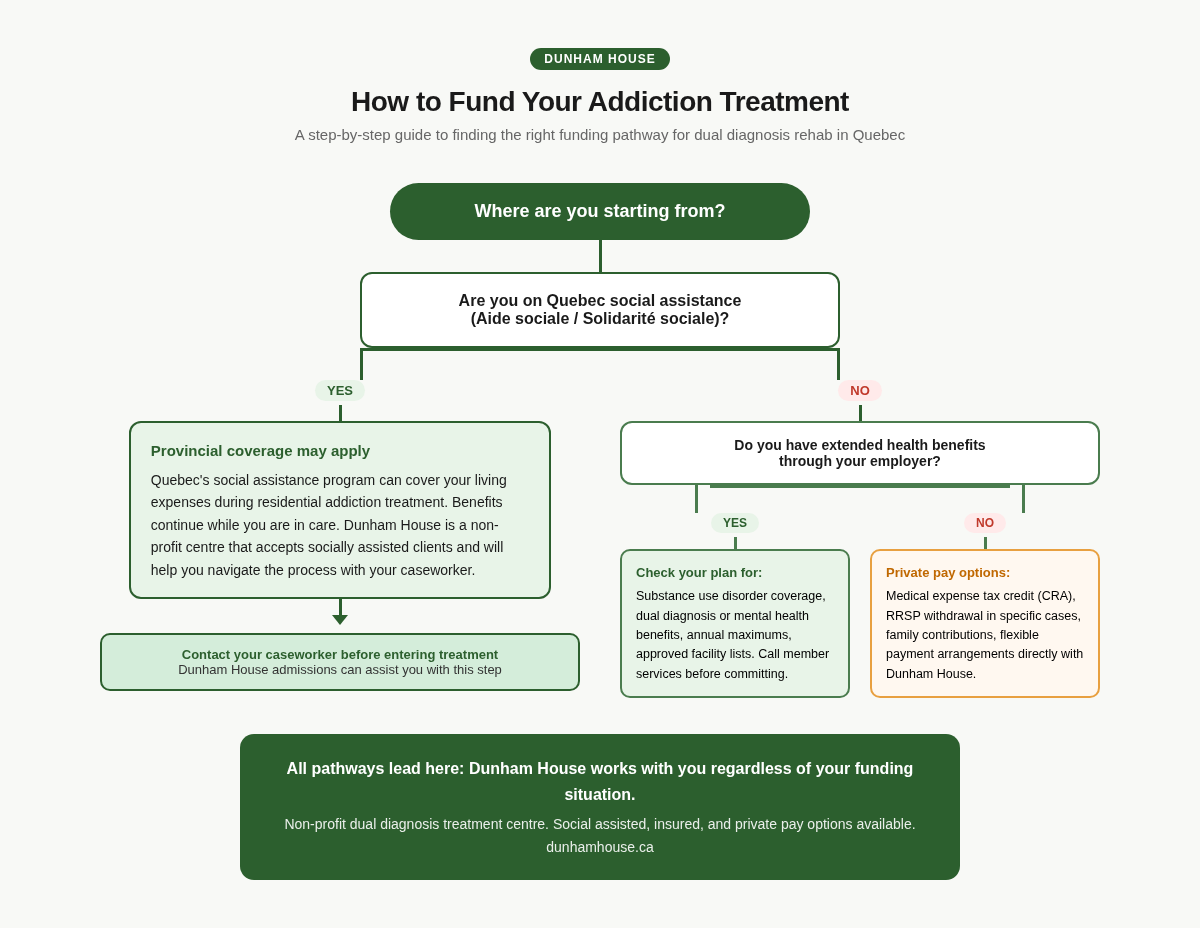
This section is specifically for people currently receiving provincial social assistance in Quebec, whether through the Programme d'aide sociale or the Programme de solidarite sociale.
Quebec's social assistance programs include a specific provision for addiction treatment that most people don't know exists. If you are receiving benefits and you enter an accredited addiction treatment centre or dual diagnosis rehab facility, the province can cover your living expenses for the duration of your stay. This is a real, accessible pathway to residential addiction treatment that is not widely advertised.
Under the current rules, recipients undergoing addiction treatment or mental health rehabilitation can also earn up to $200 per month in work income without having their benefits reduced. Benefit amounts are indexed annually, with a 2.05% increase applied in January 2026.
To access this coverage, notify your social assistance caseworker before entering treatment. They can process the living expense coverage and ensure your benefits continue while you are in an addiction treatment or dual diagnosis recovery program. The facility must be a recognized centre.
As a non-profit dual diagnosis treatment centre, Dunham House accepts socially assisted clients and works directly with individuals and families to navigate the process. If you are on social assistance and wondering whether this pathway applies to you, the admissions team can walk through your specific situation at no obligation.
For more detail on the provincial program, the official reference is the Quebec government page on addiction living expenses at www.quebec.ca.
Paying Out of Pocket for Residential Addiction Treatment
Some people fund their addiction recovery directly, without insurance reimbursement. This is more common than people assume, particularly for individuals who are self-employed, between jobs, or whose coverage does not extend to private rehab centres or dual diagnosis treatment programs.
A few things worth knowing if this is your situation:
Medical expenses for drug and alcohol addiction treatment are eligible as a medical expense tax credit on your Canadian federal tax return. This includes fees paid to a licensed residential addiction treatment centre. Keep all receipts and consult a tax professional about what qualifies under your return.
Some families use personal savings, RRSPs in specific circumstances, or pooled family contributions to cover the cost of inpatient rehab. Many families describe it as the most significant financial decision they have made, and also the most important.
Payment flexibility is worth asking about directly. Many private dual diagnosis rehab centres, including Dunham House, can discuss arrangements based on your specific financial situation.
The Real Cost of Untreated Addiction and Co-Occurring Mental Health Disorders
The cost of dual diagnosis treatment or inpatient addiction rehab is real. So is the cost of not going. Lost employment, legal consequences, emergency medical care, damaged relationships, and worsening mental health conditions all compound when addiction and co-occurring disorders go untreated. Substance use disorder does not stabilize on its own, and neither do the anxiety, depression, trauma, or other mental health conditions that often drive it.
Residential addiction treatment is not a luxury. For most people who go through it, it is the intervention that makes sustained recovery possible. The clinical intensity of an inpatient dual diagnosis program, treating both the addiction and the underlying mental health condition at the same time, produces outcomes that outpatient support alone rarely achieves for complex cases.
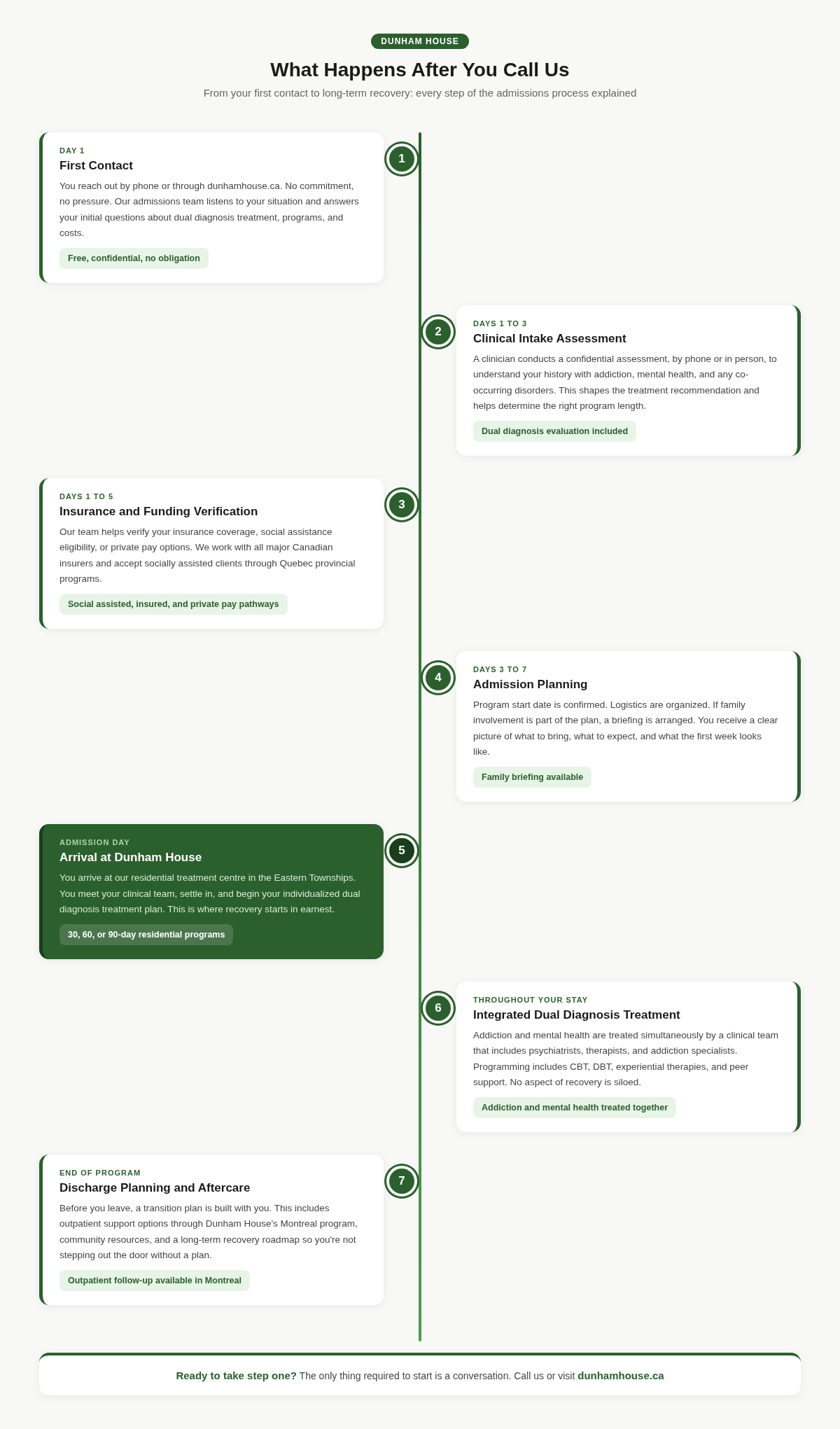
If cost is the thing standing between you and picking up the phone, we would rather talk through the numbers with you directly than have you wait another year. The admissions team at Dunham House is available to walk through insurance options, social assistance eligibility, and program choices without pressure.
Ready to Talk About Treatment Options?
Dunham House is a non-profit dual diagnosis treatment centre offering residential and outpatient addiction recovery programs for adults in Quebec. We specialize in integrated care for co-occurring mental health and substance use disorders, treating both conditions simultaneously rather than one at a time. We work with clients across all financial situations, including those on social assistance, those using private insurance, and those paying privately. Our admissions team speaks both English and French and can help you navigate coverage, funding options, and program choices without pressure. Reach out at dunhamhouse.ca or call us directly to start the conversation.
Dunham House
About Dunham House
Located in Quebec's Eastern Townships, Dunham House is a residential treatment centre specializing in addiction and providing support to individuals with concurrent mental health challenges. We are the only residential facility of our kind in Quebec that operates in English.
Our evidence-based programs include a variety of activities such as art, music, yoga, and equine-assisted therapy. In addition to our residential services, we offer a full continuum of care with outpatient services at the Queen Elizabeth Complex in Montreal.