
Dual Diagnosis in LGBTQ+ Communities: Comprehensive Mental Health and Addiction Treatment Strategies
Dual diagnosis, the co-occurrence of mental health disorders and substance use disorders, creates unique challenges, chiefly within LGBTQ+ communities. This article analyzes the intersection of dual diagnosis and marginalized stress, stressing the importance of inclusive care strategies. Readers will acquire understanding of how stress experienced by minorities impacts mental health, the principles of inclusive care, and effective treatment programs tailored for LGBTQ+ individuals. Comprehending these dynamics is key for addressing the specific needs of this population, which often faces heightened stigma and discrimination. We will examine the mechanisms of stress experienced by minorities, the significance of tailored care plans, and the resources available for people seeking affirming treatment options.

What is Dual Diagnosis and How Does it Affect LGBTQ+ Individuals?
Dual diagnosis refers to the simultaneous presence of a mental health disorder and a substance use disorder. This condition is particularly prevalent among LGBTQ+ individuals, who commonly experience distinct stressors that worsen their mental health challenges. The relationship between these disorders can complicate treatment, rendering it necessary to understand the specific impacts on LGBTQ+ populations.
Defining Dual Diagnosis: Co-occurring Mental Health and Substance Use Disorders
Dual diagnosis comprises a variety of co-occurring disorders, including anxiety, depression, and substance use issues. For LGBTQ+ individuals, these disorders can appear in various ways, commonly affected by societal stigma and discrimination. The complexity of dual diagnosis requires integrated treatment approaches which address both mental health and substance use concurrently, ensuring that individuals receive thorough care customized to their needs.
Prevalence and Exclusive Challenges in LGBTQ+ Populations
Research indicates that LGBTQ+ individuals experience higher rates of mental health disorders and substance use disorders compared to their heterosexual counterparts, raising the chance of dual diagnosis. Elements contributing to this prevalence include minority-related stress, social isolation, and discrimination. These challenges may lead toward a cycle of substance use as individuals attempt to cope with their mental health struggles. Perceiving these special challenges is important for developing effective treatment strategies that connect with the experiences of LGBTQ+ individuals.
How Does Minority Stress Impact Mental Health in LGBTQ+ Communities?
Minority stress theory posits that the distinct stressors experienced by marginalized groups can lead to adverse mental health outcomes. For LGBTQ+ individuals, this stress can greatly affect their psychological health, resulting in elevated rates of anxiety, depression, and substance use disorders.
Understanding Minority Stress Theory and Its Effects
Minority-related stress derives from the chronic social stressors that LGBTQ+ individuals face, including discrimination, stigma, and social rejection. These stressors might lead toward internalized homophobia and heightened vulnerability to mental health disorders. The psychological effect of stress experienced by minorities is significant, frequently resulting in feelings of worthlessness and isolation, which can exacerbate existing mental health issues.
Mechanisms Relating Minority Stress to Dual Diagnosis
The processes connecting stress related to minority status to dual diagnosis are varied. Chronic stress can lead to maladaptive coping strategies, such as substance use, while individuals seek relief from their emotional pain. Additionally, the lack of helpful environments can restrict access to psychological health resources, additionally complicating the treatment of co-occurring disorders. Knowing these mechanisms is vital to developing effective interventions which address both mental health and substance use.
What Are Inclusive Care Principles for LGBTQ+ Dual Diagnosis Treatment?
Inclusive care principles are important for successfully addressing the needs of LGBTQ+ individuals with dual diagnosis. These principles point out the importance of creating safe, affirming environments that accept and validate the unique experiences of LGBTQ+ individuals.
LGBTQ Affirming Therapy and Trauma-Informed Care Approaches
LGBTQ affirming therapy incorporates an understanding of the specific challenges experienced by LGBTQ+ individuals, ensuring that therapeutic practices are sensitive to their experiences. Trauma-informed care recognizes the impact of past traumas, including discrimination and violence, on mental health. Through integrating these approaches, therapists can establish a supportive environment that fosters healing and recovery.
Personalized Care Plans Addressing Intersectionality and Minority Stress
Tailored care plans are necessary for addressing the intersectional identities of LGBTQ+ individuals. These plans should consider the distinct stressors and experiences each individual faces, tailoring treatment to their specific needs. By accepting the difficulties of identity and minority-related stress, medical professionals can offer more efficient and empathetic care.
Which Dual Diagnosis Therapy Programs Support LGBTQ+ Recovery?

Various therapy programs are designed to support LGBTQ+ individuals in their recovery from dual diagnosis. These programs commonly incorporate evidence-based practices and aftercare support to guarantee continued recovery.
Evidence-Based Integrated Treatment Models
Integrated treatment models combine mental health and substance use disorder treatments, delivering a holistic approach to recovery. Evidence-based practices, such as cognitive-behavioural therapy (CBT) and motivational interviewing, are often used to address the complexities of dual diagnosis. These models underscore the importance of treating both disorders concurrently to achieve optimal outcomes.
Comprehensive Aftercare and Addiction Recovery Support
Aftercare support is necessary for individuals recovering from dual diagnosis. Programs that offer ongoing support, such as group therapy and peer support networks, can greatly improve rehabilitation results. These resources help individuals maintain their progress and meet the challenges of reintegration into their communities.
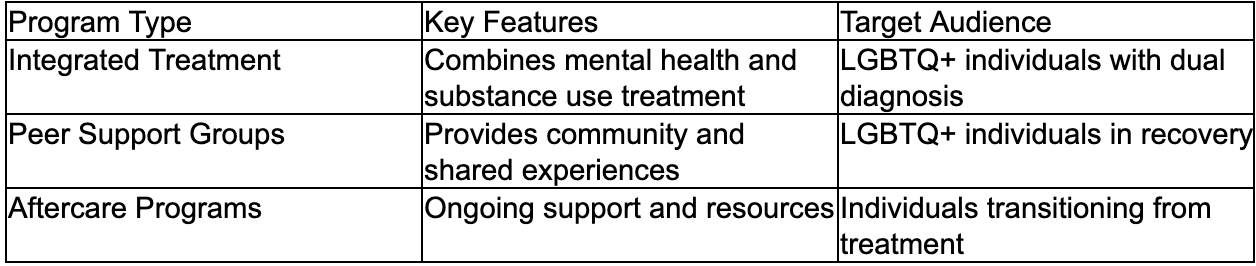
This table illustrates the various types of therapy programs available for LGBTQ+ individuals, stressing the importance of integrated and caring care in the recovery process.
How Can Minority Stress Coping Strategies Strengthen Mental Health Support?
Coping strategies are key for managing the effects of minority-related stress on mental health. Effective techniques can empower LGBTQ+ people to navigate their challenges and foster resilience.
Effective Coping Techniques for LGBTQ+ Individuals
Coping techniques, for example, mindfulness, cognitive restructuring, and social support, can greatly improve mental health outcomes for LGBTQ+ individuals. Mindfulness practices help individuals remain grounded and alleviate anxiety, whereas cognitive restructuring encourages positive thinking patterns. Building a strong support network is also important for fostering resilience and mitigating feelings of isolation.
Role of Community plus Peer Support in Recovery
Community and peer support play a vital role in the recovery process for LGBTQ+ individuals. Interacting with others who share similar experiences may offer validation and encouragement, helping individuals feel less by themselves in their struggles. Peer support groups can also give practical advice and resources, boosting the overall recovery experience.
Where Can LGBTQ+ Individuals Find Affirming Dual Diagnosis Treatment?
Finding affirming treatment options is vital for LGBTQ+ people seeking help for dual diagnosis. Identifying safe and open recovery centers can significantly affect treatment effectiveness.
Identifying Safe and Accepting Addiction Recovery Centers
When searching for addiction recovery centers, LGBTQ+ individuals should look for facilities that explicitly state their pledge to inclusivity. Key indicators include staff training in LGBTQ+ issues, visible affirming practices, and a friendly environment. Researching reviews and testimonials can also provide insight into the center's culture and approach to care.
Assistance and Support Networks for LGBTQ+ Mental Health
Many resources and support networks exist to assist LGBTQ+ individuals in finding affirming treatment options. Organizations dedicated to LGBTQ+ mental health can provide valuable information and referrals to inclusive care providers. Additionally, internet platforms and community groups can provide support and connection for individuals coping with similar challenges.
Checkout:https://itgetsbettercanada.org/get-help/
Conclusion
In conclusion, addressing dual diagnosis in LGBTQ+ communities necessitates a thorough comprehension of the distinct challenges encountered by this population. By implementing inclusive care principles and appreciating the impact of minority stress, medical professionals can offer effective treatment strategies which promote healing and well-being. Dunham House, a specialized addiction treatment center in Canada, focuses on integrated recovery approaches, providing integrated treatment programs that tackle both mental health and substance use disorders concurrently. Our dual diagnosis treatment program incorporates trauma-informed care and LGBTQ+ inclusive practices, establishing a safe and affirming environment for people seeking support.

DUNHAM HOUSE
About Dunham House
Located in Quebec's Eastern Townships, Dunham House is a residential treatment centre specializing in addiction and providing support to individuals with concurrent mental health challenges. We are the only residential facility of our kind in Quebec that operates in English.
Our evidence-based programs include a variety of activities such as art, music, yoga, and equine-assisted therapy. In addition to our residential services, we offer a full continuum of care with outpatient services at the Queen Elizabeth Complex in Montreal.