
FOMO and Addiction Recovery: What Fear of Missing Out Really Does to Your Mental Health
For people living with addiction, anxiety, or depression, FOMO is more than a modern inconvenience. It's a symptom worth taking seriously, and in some cases, a genuine relapse risk.
In This Article
Why Social Media Made the Comparison Trap Worse
What FOMO Actually Does to Your Mental Health
The Specific Challenges of FOMO in Recovery
FOMO and Co-Occurring Disorders
Choosing to Opt Out Is an Act of Clarity
A Note for Families and Loved Ones
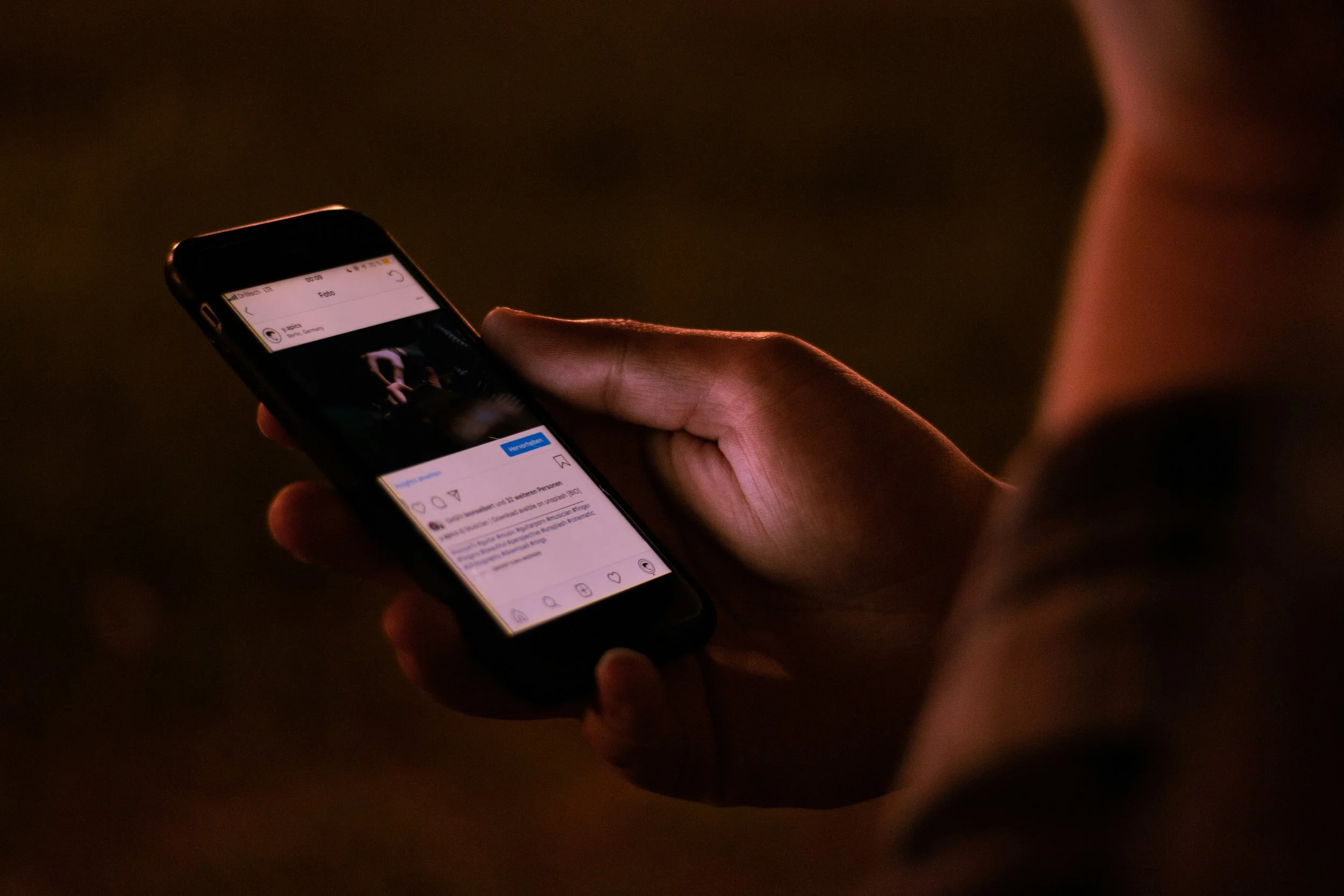
There's a particular kind of restlessness that comes with scrolling through your phone at 10 PM. You weren't bored exactly. You just wanted to check in. Then somehow, thirty minutes later, you're looking at photos from a dinner you weren't invited to, a trip someone took last weekend, a milestone a former colleague just hit, and you feel worse than when you started.
That's FOMO. The persistent, low-grade anxiety that somewhere, something is happening without you, and that your life is somehow falling short by comparison. It sounds almost trivial when you put it that way. For many people, especially those navigating mental health challenges or working through addiction and recovery, it isn't trivial at all.
Why Social Media Made the Comparison Trap Worse
Human beings have always measured themselves against those around them. Before social media, that comparison was largely limited to your immediate circle. You might have felt a twinge of envy seeing a neighbour's new car or hearing that a coworker got a promotion, but those moments were finite. They happened and then they passed.
Now, comparison is constant and curated. Every platform delivers a relentless highlight reel, the 5% of people's lives that photographs well, that reads as successful, that generates likes. You are not seeing the anxiety behind the achievement post. You are not seeing the argument that happened right before the vacation selfie. You're seeing a distorted version of reality, and your brain treats it like the full picture.
“You don’t see the struggles beneath the grateful caption. You see a distorted version of reality, and your brain accepts it as the norm.”
The result is a specific kind of guilt that's hard to name but very easy to feel: the sense that rest is laziness, that silence means being forgotten, that you should always be doing more, posting more, achieving more. The fear that if you're not moving, you're falling behind.
What FOMO Actually Does to Your Mental Health

FOMO is not a personality flaw. It has measurable psychological effects, consistent across research, that increase anxiety, lower life satisfaction, and disrupt the ability to be present in your own life. Here's how it shows up in practice:
It distorts your self-perception
Constantly measuring your internal experience against someone else's curated, external image will always leave you feeling inadequate. Your real life, with its texture and difficulty, cannot compete with a version of someone else's life that has been edited for maximum appeal.
It drives impulsive decisions
FOMO pushes people to say yes when they mean no, to events they don't want to attend, social situations they aren't ready for, commitments they can't sustain. The fear of being left out can override judgment in ways that create real consequences.
It makes rest feel like failure
The pressure to stay visible, to keep showing up, to remain connected at all times is genuinely exhausting. People living with burnout, depression, or anxiety are particularly vulnerable. The mind needs rest. FOMO tells you rest is a liability.
It rewires how you measure your own worth
When digital feedback, likes, comments, follower counts, starts shaping how you see yourself, you've handed over your self-concept to an algorithm. The feedback loop is designed to keep you engaged, not to make you feel good about yourself.
The Specific Challenges of FOMO in Addiction Recovery
Recovery involves, among many other things, stepping back from certain social environments and substances. Sometimes that means leaving behind relationships tied to active addiction. Sometimes it means sitting out events where alcohol is central. Sometimes it means choosing rest over going out, a meeting over a party, a hard conversation over an easy escape.
Every one of those choices involves a version of FOMO.
And here's the part that doesn't get talked about enough: for many people in recovery, FOMO isn't just uncomfortable. It can be a genuine relapse risk. The fear of being left behind socially. The grief over an old life that felt exciting, even when it was destroying you. The loneliness that can come with early sobriety.
“FOMO in recovery often shows up disguised as something else, resentment, irritability, isolation, or the slow drift back toward old environments.”
It might look like resentment. It might look like isolation. It might look like the thought, "Everyone else can have a drink, why can't I?" None of this makes recovery impossible or social media uniquely dangerous. It means that understanding FOMO as a psychological mechanism, and developing tools to respond to it, is a legitimate part of the clinical work.
FOMO and Its Connection to Co-Occurring Disorders
At Dunham House, we work with people navigating both addiction and mental health conditions simultaneously, what's known as dual diagnosis, or co-occurring disorders. FOMO sits at the intersection of several patterns we frequently see in clinical work: social anxiety, generalized anxiety disorder, depression, and low self-worth.
For someone living with anxiety, FOMO accelerates the thought spiral. The fear of missing out becomes the fear of falling behind, which becomes catastrophizing about the future, which keeps the nervous system in a state of chronic stress.
For someone living with depression, FOMO deepens the sense that everyone else is experiencing a life they are excluded from. It confirms the depression's central lie: that you are somehow less than, left out, not deserving.
For someone with a substance use disorder, it can trigger the impulsive thinking that addiction thrives on. If rest feels like failure and silence feels like rejection, the urge to do something, anything, to change how you feel becomes much harder to resist.
This isn't about blaming social media for addiction. The relationship is more nuanced than that. But FOMO is not a mere mood. For some people, it's part of a clinical picture that deserves real attention.
Choosing to Opt Out Is an Act of Clarity, Not Defeat

You don't have to keep up with everything and everyone. You don't have to be visible to be valuable. You don't have to attend everything, achieve everything, or document every moment. For someone in recovery, this can feel genuinely radical, even when it's exactly what's needed.
Learning to sit with the discomfort of missing out, to tolerate the quiet, to find worth outside external validation, these are not soft skills. They're clinical targets in evidence-based treatment for a reason.
DBT: Dialectical Behaviour Therapy
CBT :Cognitive Behavioural Therapy
Trauma-Informed Care:Understanding root patterns
DBT addresses distress tolerance and emotional regulation directly.
CBT challenges the distorted thinking patterns that FOMO depends on.
Trauma-informed care helps people understand why they reach for connection or stimulation the way they do.
Recovery is not about becoming someone who never feels FOMO. It's about developing the capacity to feel it, name it, and not let it make decisions for you.
A Note for Families and Loved Ones
If you're reading this as a family member or close friend of someone navigating addiction, this matters for you too. FOMO affects the people around someone in recovery in specific ways. The pressure you feel to fix things, to help enough, to be present enough, to do more, is real.
Watching someone you love struggle while feeling helpless generates its own version of that fear of not doing enough. Dunham House's Family Program exists because recovery doesn't happen in isolation. The people around someone in treatment carry their own weight, and they deserve support too.
The Right Support Changes Everything
FOMO isn't a character flaw. It's a signal. With the right clinical support behind it, it becomes manageable, and recovery becomes possible.

Dunham House
About Dunham House
Located in Quebec's Eastern Townships, Dunham House is a residential treatment centre specializing in addiction and providing support to individuals with concurrent mental health challenges. We are the only residential facility of our kind in Quebec that operates in English.
Our evidence-based programs include a variety of activities such as art, music, yoga, and equine-assisted therapy. In addition to our residential services, we offer a full continuum of care with outpatient services at the Queen Elizabeth Complex in Montreal.